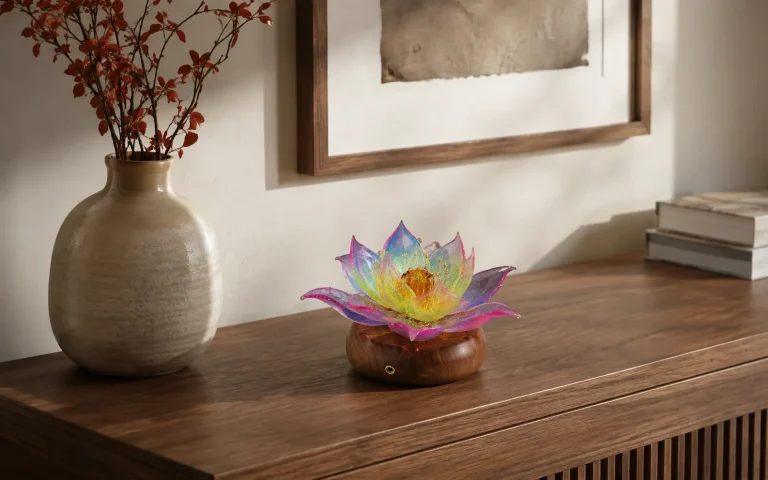
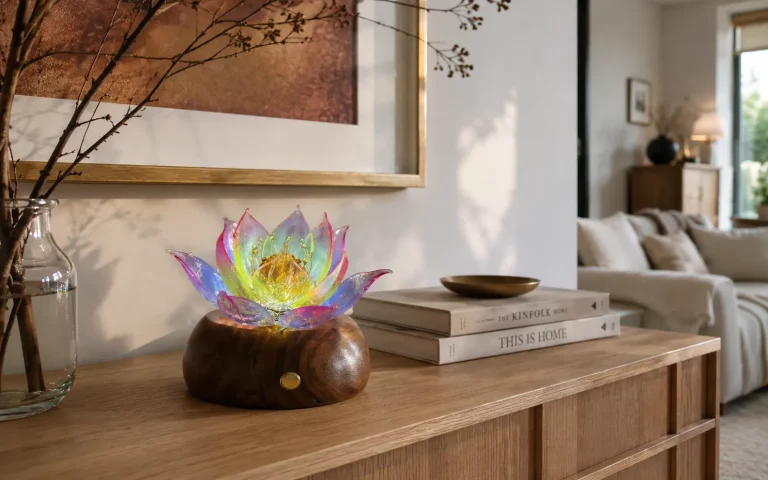
You may have seen a lamp that looks more like an object than a lighting fixture — a piece of glass glowing on a console, an unusual ceramic form beside a sofa, or a small light that still looks interesting when it is switched off.
These pieces are often described as sculptural lights. But the more useful question is not what to call them. It is whether one actually works in your home.
If your room already has the lighting it needs but still feels visually unfinished, a sculptural light can add something that a conventional lamp does not: a clear form during the day and another layer of atmosphere after dark.
When Does a Sculptural Light Make Sense in a Home?
Not every room needs another decorative object. A sculptural light makes the most sense when it solves a visual or atmospheric problem that ordinary functional lighting does not.
Your Console Feels Unfinished
One sculptural light can provide a stronger focal point than a group of small decorative objects while still leaving useful empty space.
You Already Have Functional Lighting
If ceiling lights and reading lamps already do their jobs, another small light can focus more on atmosphere, material, and form.
You Want More Than a Conventional Table Lamp
A shelf, console, or quiet corner may benefit from an expressive object rather than another familiar lamp-and-shade silhouette.
You Want the Room to Change After Dark
A sculptural light can show one material character during the day and reveal another layer of edges, transparency, color, or texture at night.
Small sculptural lights are also useful when you do not want to make a permanent change to the room. They can add another visual layer without rewiring a space, replacing a ceiling fixture, or committing to a large piece of furniture.
Where Does a Small Sculptural Light Work Best?
A sculptural light does not need to be large to have presence. On a console or side table, even a compact object can become noticeable when the form, material, and surrounding space work together.
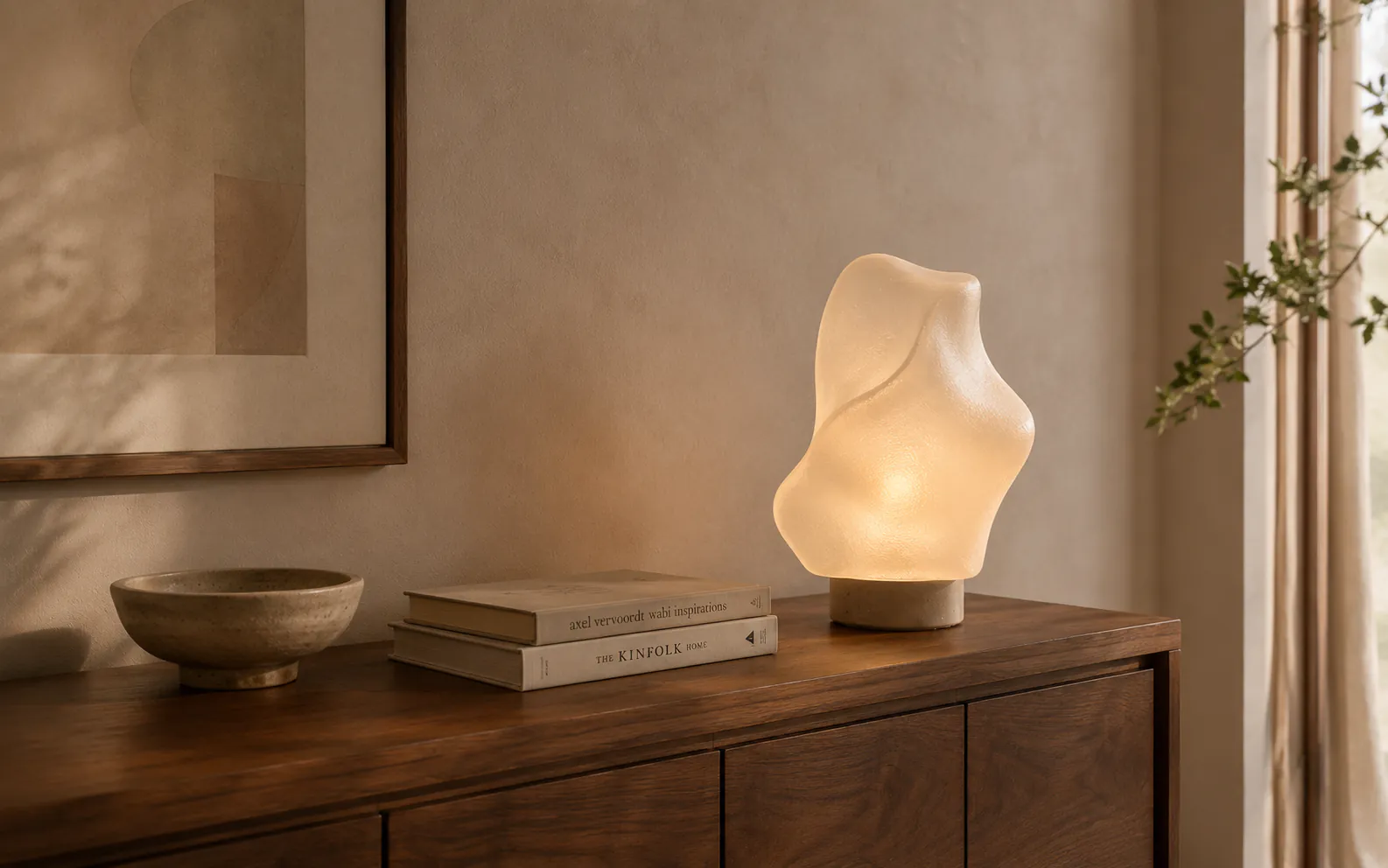
- Console or sideboard: A long surface gives the object breathing room and a clear background for its silhouette.
- Side table: Beside a sofa or lounge chair, a small light can create a localized visual zone without controlling the whole room.
- Shelf: Compact pieces work well when they are not squeezed tightly between books, frames, and other decor.
- Bedside table: This works best when you do not depend on the sculptural light for serious reading.
- Study or reading corner: Use it to add atmosphere alongside proper desk or reading lighting rather than replacing functional illumination.
If you are working with a fragile glass object, usable surface space matters as much as style. For more detailed guidance, see our glass lotus light placement guide for bedrooms, studies, and living rooms .
How Much Light Do You Actually Need?
This is one of the most important questions to answer before buying. A beautiful sculptural light can still be the wrong purchase if you expect it to do the job of a desk lamp or ceiling light.
If you need to read, work, or illuminate an entire room, check the actual light output first. If the room already has enough practical lighting, you have more freedom to choose something primarily for shape, material, and atmosphere.
Think About the Job the Light Needs to Do
Many small sculptural lights sit in the second or third category. 9Purple glass lotus lights are designed primarily for localized decorative glow. Their internal illumination reveals the layered glass structure rather than replacing a ceiling light, desk lamp, or dedicated reading lamp.
If you are comparing lotus models by brightness, color, room atmosphere, and visual presence, continue with How to Choose a Glass Lotus Light for Your Room .
Glass, Ceramic, Metal, or Stone?
Material changes how a sculptural light feels in the room. There is no single best choice. The better question is what your space is currently missing.
Choose Glass for Lightness and Change
Transparent and translucent areas keep the object visually lighter. Colored glass can also change noticeably between daylight and evening illumination.
Choose Ceramic for Calm and Solidity
Matte ceramic feels quieter and more tactile, while glazed finishes add small reflections without the transparency of glass.
Choose Metal for Cleaner Lines
Metal works well when the room benefits from sharper outlines, clearer geometry, and a more graphic visual direction.
Choose Stone for More Visual Weight
Stone and plaster usually feel heavier, quieter, and more architectural, particularly in neutral interiors.
There is no “correct” sculptural-light material. Choose the one that gives the room something it does not already have.
Why Flower and Organic Forms Work So Well
Most interiors contain a lot of straight lines. Walls, screens, shelving, tables, cabinets, and picture frames are usually rectangular.
An organic object can soften that structure without requiring any change to the furniture itself. This is one reason flower lamps and other botanical forms work well as sculptural lighting.
Petals, leaves, stems, and branches naturally introduce curves, overlapping layers, changes in direction, slight asymmetry, and a clear overall silhouette.
A flower lamp does not need to reproduce a real flower perfectly. Some designs are literal, while others only borrow the idea of opening petals or curved leaves.
What matters is whether the botanical form contributes to the way the object looks and the way the light behaves.
What Makes a Glass Flower Lamp Different?
A glass flower lamp can look more like a decorative glass object during the day than a conventional lamp. Once illuminated, the same object may change considerably.
Color inside the petals can become stronger. Thin edges may become easier to see. Overlapping layers can create more depth, and transparent areas may reveal colors behind them.
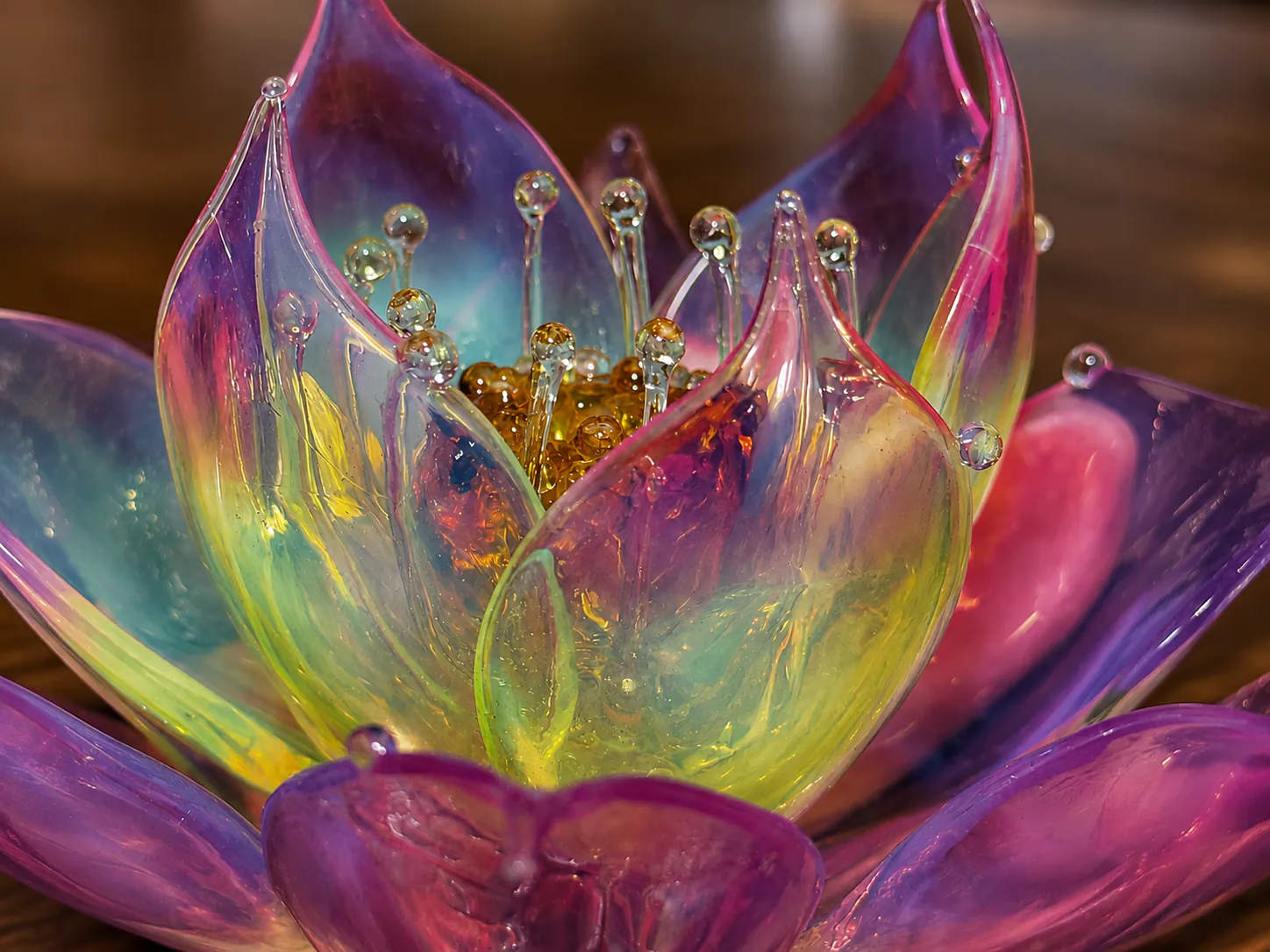
That difference between daytime and evening is one of the reasons glass works particularly well with botanical forms.
In a layered glass flower, you may be able to see the front petal, the petal behind it, the center of the flower, and several color transitions at the same time.
The viewing angle also matters. A multicolored glass object can look warmer from one side and cooler from another depending on which layers overlap and how the surrounding light enters the glass.
Lotus, rose, tulip, lily, and other botanical forms can all sit within the broader idea of a glass flower lamp. The specific flower is less important than whether the shape, material, and illumination feel like one complete object rather than three separate design decisions.
Before You Buy: Six Things Worth Checking
The product photograph is only the beginning. Before buying a sculptural light, check how it will actually work in your home.
Check the Actual Size
Do not estimate scale from photography alone. Check the listed measurements and use a tape measure on the intended surface. If the object has petals, branches, or other projecting parts, leave additional space around it.
Check What the Light Is Supposed to Do
Ask yourself whether you need illumination, atmosphere, or both. If practical brightness matters most, choose the lighting function first.
Check the Power Source
Mains power, rechargeable batteries, and replaceable batteries all affect where an object can realistically sit. An awkward cable can change the final composition more than expected.
Think About Fragility
Glass petals, branches, thin edges, and projecting forms need more protection than compact ceramic objects. Busy tables filled with keys, bags, mail, and cups may not be ideal.
Understand Handmade Variation
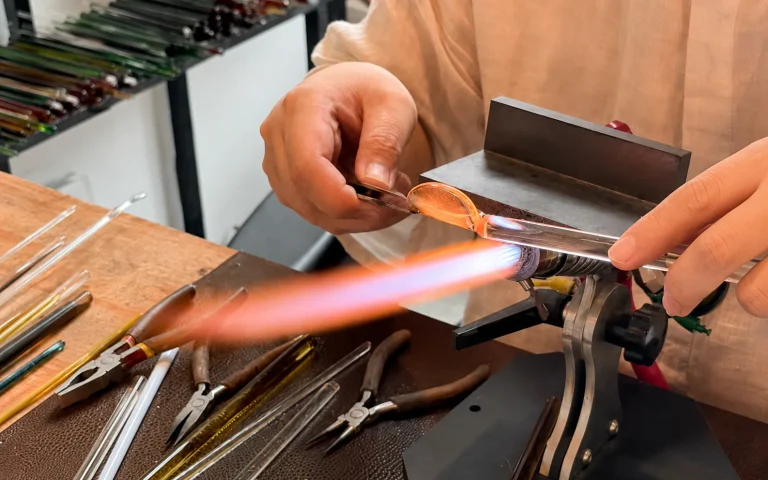
Handmade objects are not expected to reproduce every millimeter mechanically. Small differences in curve, texture, transparency, color transition, or assembly can occur while the overall design remains consistent. Read Why Every Lampworked Glass Lotus Is Slightly Different for a closer explanation.
Check Production and Shipping Before Ordering
For higher-value handmade objects, confirm whether the piece is in stock or made after ordering. Also check production time, international shipping, damage procedures, and packaging.
Fragile handmade glass should be packed primarily for protection during transit. Protective shipping packaging is more important than decorative presentation when the object contains delicate handmade structures.
A Glass Lotus as a Small Sculptural Light
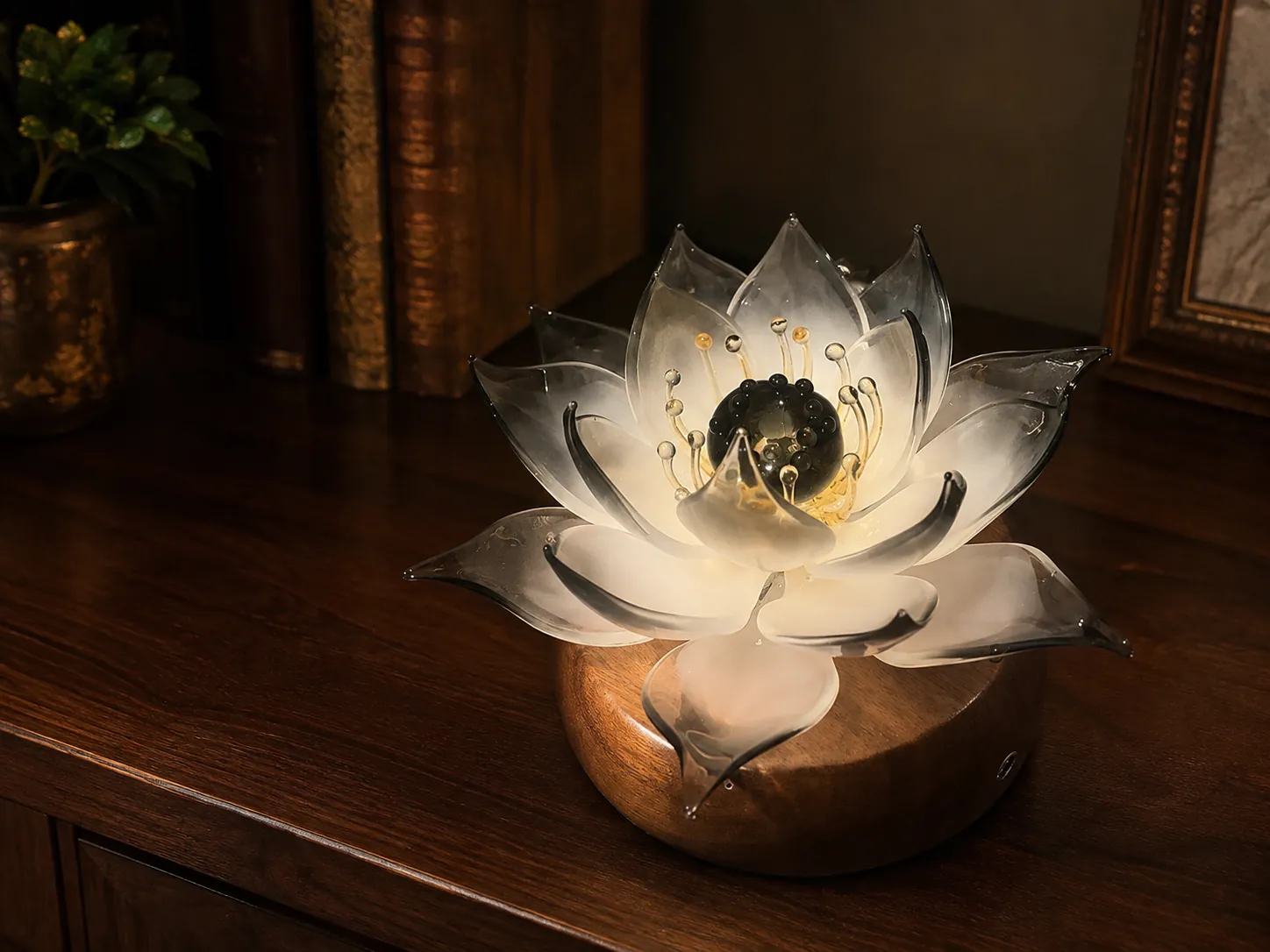
A glass lotus is one example of a small sculptural light that behaves differently during the day and after dark.
During daylight, the flower first reads as a three-dimensional glass object. The petals, transparency, color, center, and relationship with the base determine how strongly it enters the room.
After dark, internal illumination reveals another layer. The glow can make petal edges easier to see, strengthen some colors, and reveal overlapping sections that were quieter during the day.
Prism Lotus
Choose Prism when you want the glass to become a noticeable color point in a more neutral room. Its layered multicolor petals create stronger visual movement.
Lunar Lotus
Lunar is easier to place when you prefer light interiors and do not want the object to dominate the surface.
Noir Lotus
Noir works well with darker wood, gray tones, and interiors where you want depth rather than vivid color.
There is no universally best version. The more useful question is which one makes sense with the room, surface, and level of visual attention you want the object to receive.
Explore Glass Lotus Decor
Compare handmade glass lotus lights and sculptural glass objects by color, form, room atmosphere, and decorative lighting role.
Explore Glass Lotus DecorA sculptural light is worth considering when your room already has the illumination it needs but still feels visually unfinished.
If you need brightness, start with function.
If you need atmosphere, material, and presence, start with the object.
The right piece should not feel like a lamp that was simply added to the room. It should feel like an object that belongs there — with light as one part of what makes it interesting.
FAQ: Sculptural Light for the Home
What is a sculptural light?
A sculptural light is a lamp or illuminated object whose form, material, and visual presence matter in addition to the light it produces. It should still contribute something to the room when switched off.
Are sculptural lights bright enough for reading?
Some are, but many are not. “Sculptural” describes the design rather than a specific brightness level, so always check the actual light output and intended use before buying.
Where should I put a sculptural light?
Common locations include consoles, sideboards, side tables, shelves, bedside tables, and study corners. Choose a stable surface with enough clear space around the object.
What material is best for a sculptural light?
There is no single best material. Glass suits rooms that benefit from transparency and changing light, ceramic feels more solid and tactile, metal creates cleaner lines, and stone or plaster adds visual weight.
What is a glass flower lamp?
A glass flower lamp is a decorative lighting object that uses glass to create a floral or botanical form. Transparency, layered petals, color, and internal illumination can give the object a sculptural quality.
Is a glass flower lamp the same as a normal table lamp?
Not necessarily. Some glass flower lamps provide practical illumination, while others are designed mainly for decorative glow. Check the brightness and intended use of the individual product before buying.