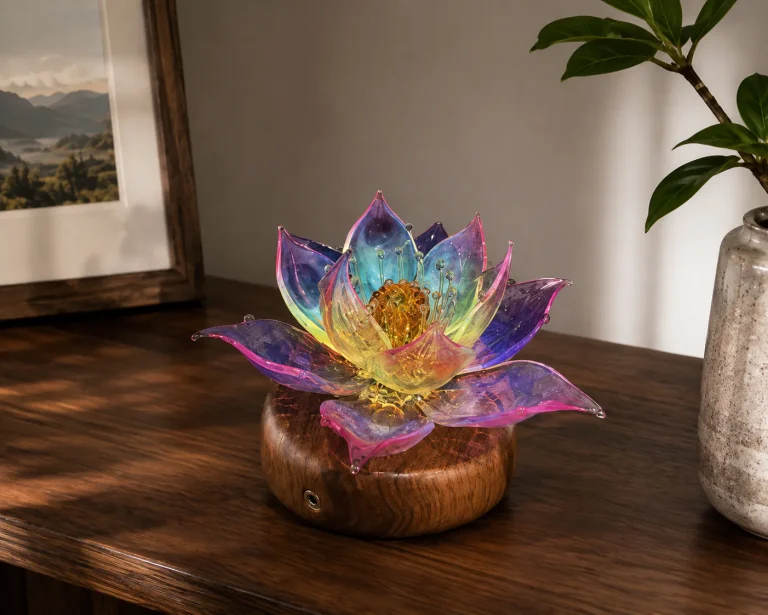
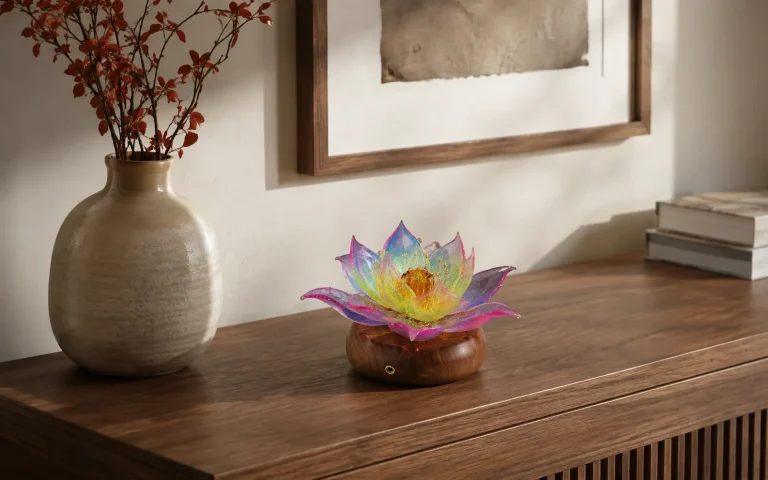
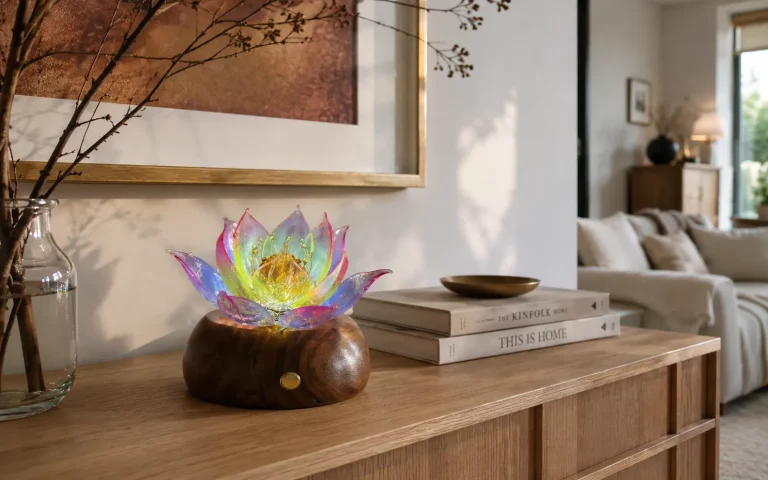
The phrase Liuli glass vs ordinary glass can be confusing because “Liuli” does not describe one universal modern glass formula. It can refer to a wider Chinese cultural language of colored glass, light, symbolic form, and decorative craft.
At 9Purple, the term Liuli-inspired describes the visual and cultural direction of the collection. The actual material is modern borosilicate glass, and artisans shape it through lampworking.
Therefore, this article does not compare one historical material with every other type of glass. Instead, it compares 9Purple’s lampworked borosilicate glass objects with typical molded or mass-produced decorative glass objects.
What Does “Liuli-Inspired” Mean?
In English, the word “Liuli” often appears in discussions of Chinese colored glass, decorative glass art, historical material culture, and symbolic objects. However, the term can carry different meanings across periods, makers, and production methods.
For this reason, 9Purple uses the more precise phrase Liuli-inspired glass. The phrase identifies a design language rather than claiming that the object uses an ancient glass formula or a traditional kiln-casting process.
This design language includes translucent color, layered light, botanical or symbolic forms, and a clear relationship between the object and its surrounding space. Meanwhile, the technical product description remains straightforward: lampworked borosilicate glass.
Liuli-Inspired
This describes the collection’s Chinese visual and cultural language, including colored light, symbolic form, and decorative glass presence.
Borosilicate Glass
This is the modern glass material used to create the petals, centers, stems, buds, and other structural components.
Lampworking
Artisans heat and shape individual glass components in a focused flame before joining them into the completed object.
What Material Does 9Purple Actually Use?
9Purple glass lotus objects use modern borosilicate glass. This glass generally has lower thermal expansion than common soda-lime glass and tolerates controlled heating well. These properties make it suitable for flame-based glassworking and detailed component shaping.
The Corning Museum of Glass overview of borosilicate glass provides additional technical background on its material characteristics.
However, material alone does not determine the quality of the finished object. Design, heat control, shaping skill, joining, finishing, inspection, and overall structural balance also matter.
“Ordinary Glass” Is Not One Technical Category
The phrase “ordinary glass” is useful for search, but it is not a precise engineering term. Glass objects may use different materials and production methods, including soda-lime glass, borosilicate glass, pressed glass, blown glass, kiln-formed glass, cast glass, and molded decorative components.
Therefore, this article uses “ordinary decorative glass” to mean typical molded or mass-produced decor that aims for a highly repeated appearance. It does not suggest that every object made from another glass type has poor quality.
Skilled makers can create valuable objects through many glassworking methods. The relevant question is not whether one category is always superior. Instead, the question is which material and forming process produced the object in front of you.
A More Accurate Comparison
The useful comparison is not “valuable Liuli” versus “worthless ordinary glass.” It is lampworked borosilicate glass with separately shaped components versus typical decorative glass produced through molds, standardized parts, or repeated industrial processes.
Liuli Glass vs Ordinary Glass: The Main Differences
| Feature | 9Purple Liuli-Inspired Glass | Typical Molded Decorative Glass |
|---|---|---|
| Material | Modern borosilicate glass used for petals, centers, stems, buds, and other components. | Material varies and may include molded glass, pressed glass, composite parts, or standardized decorative components. |
| Forming method | Artisans soften glass in a focused flame and shape individual components with tools and hand movement. | Manufacturers often reproduce the primary form with molds or standardized repeated parts. |
| Structure | Petals, stamens, centers, stems, and details can exist as separate shaped elements before assembly. | Several visual details may appear as part of one repeated molded surface. |
| Variation | Small differences in curve, thickness, overlap, transparency, and color transition are normal. | Production usually aims for a highly uniform appearance across units. |
| Color | Colored glass can be layered, stretched, joined, or positioned within the structure during shaping. | Color may come from the glass itself, a repeated colored component, or an applied decorative finish. |
| Light behavior | Light reveals petal thickness, layered edges, internal overlap, and changes between clear and colored sections. | Light behavior depends on the material, mold depth, finish, and lighting design of the specific object. |
| Object identity | Each object follows the same product design while retaining small handmade differences. | Each unit generally follows a standardized repeated appearance. |
Lampworking Changes How The Form Is Built
Lampworking, also called flameworking, uses a focused flame to soften rods, tubes, or partially formed glass components. The artisan then rotates, pulls, presses, bends, or joins the heated glass.
The Corning Museum of Glass definition of flameworking describes the process as forming glass objects from rods and tubes heated in a flame.
This method suits a lotus because the flower contains several distinct visual parts. Instead of treating the lotus as one flat decorative surface, the maker can shape petals, edges, central details, and connecting elements separately.
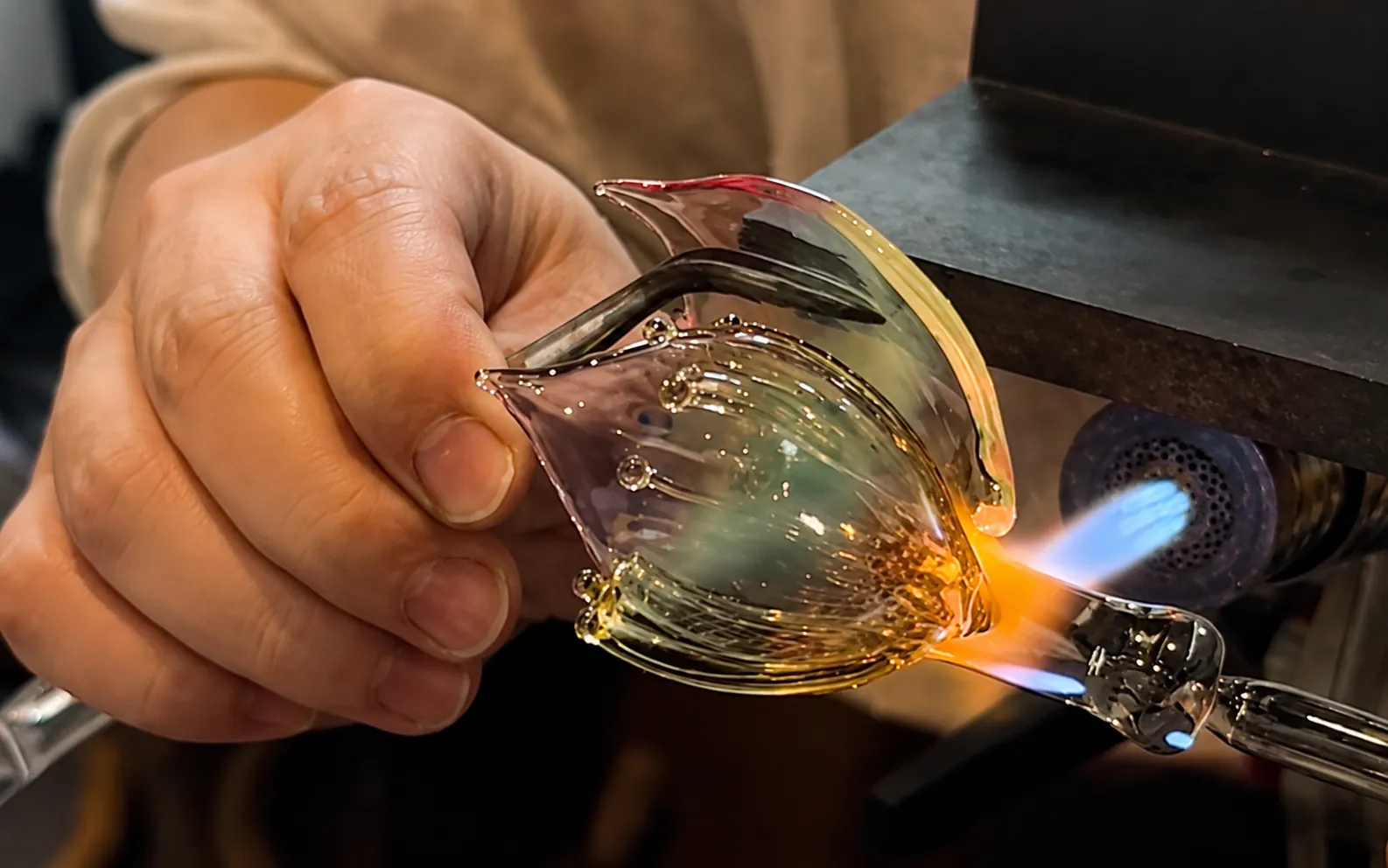
For the full production sequence, read How Lampworked Glass Is Made . That article follows the process from preparing glass components to heating, shaping, joining, cooling, and final inspection.
How Color And Transparency Differ
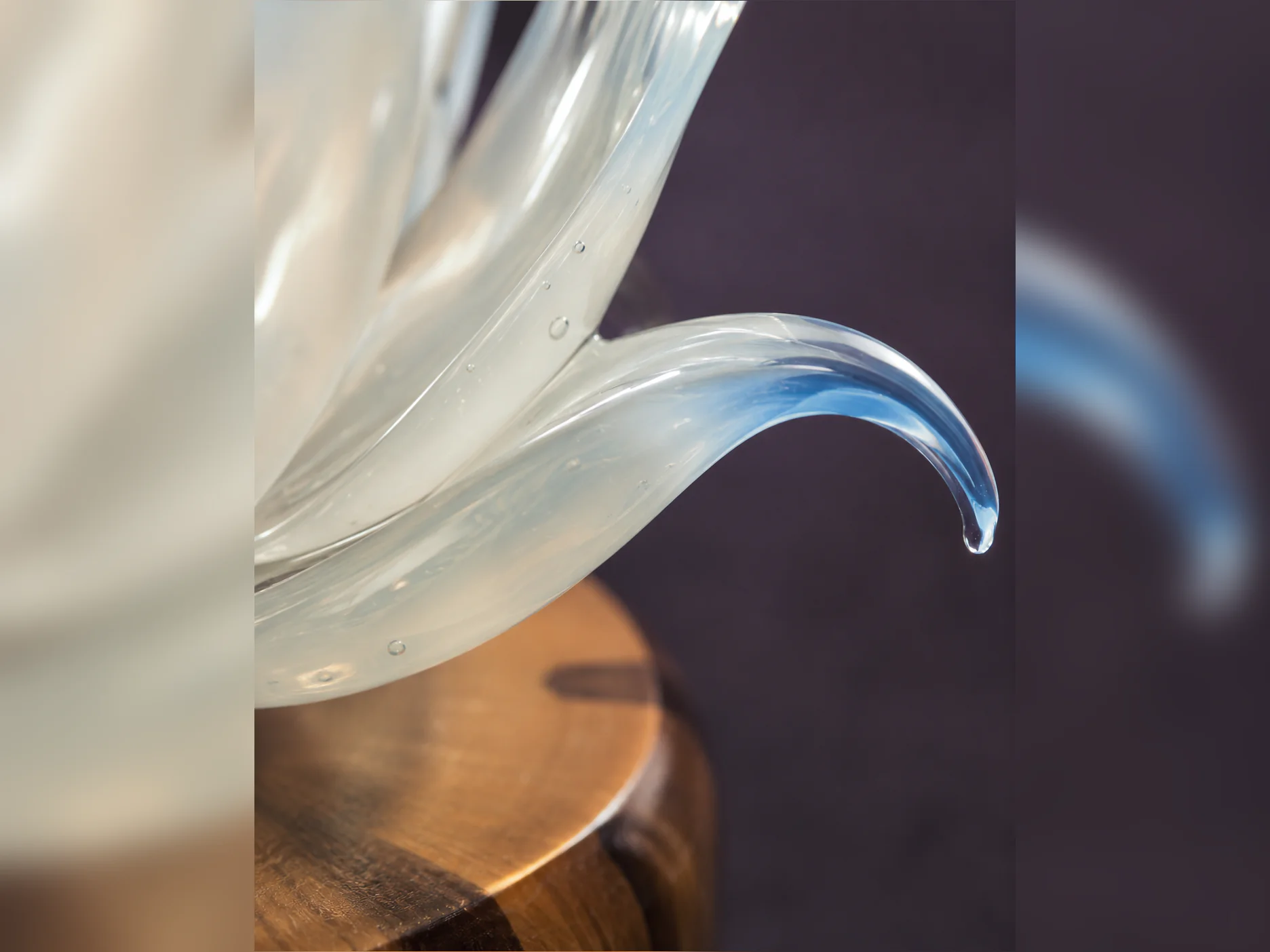
A lampworked object does not rely only on surface shine. During shaping, the artisan can place colored glass near an edge, stretch it through a petal, combine it with clearer sections, or layer it beside another color.
As a result, the same petal can appear different across its surface. A thicker section may hold more color. A thinner edge may transmit more light. An overlapping layer may create a secondary shadow or deeper color transition.
By contrast, a typical molded decorative object may repeat the same color placement and surface structure across many units. That uniformity can be useful when consistency is the main production goal.
Neither result should be judged from shine alone. Instead, examine how the object uses transparency, thickness, edge detail, color placement, and component structure.
Why Handmade Variation Appears
Artisans shape heated glass through timing, temperature, tool pressure, rotation, and hand movement. Therefore, two objects can follow the same design without becoming mechanically identical.
One petal may open slightly higher. A color transition may travel farther through one edge. A center may appear deeper from one angle. These are normal examples of handmade variation when they do not affect the structure or function of the object.
Handmade variation is different from damage. A broken petal, major crack, separated component, unusable base, or confirmed functional failure requires a different assessment.
For a detailed explanation, read Why Lampworked Borosilicate Glass Makes Every Lotus Light Different .
What This Difference Means In A Room
The production method affects more than the close-up appearance. It also changes how the object responds to daylight, nearby surfaces, and internal illumination.
During the day, transparent petals reveal their layered structure. After dark, localized internal light can make edges, overlaps, and color transitions easier to see.
However, a 9Purple glass lotus light does not replace a reading lamp, desk lamp, ceiling fixture, or other functional room lighting. Its light serves a decorative purpose and reveals the glass structure at close range.

For meaning and placement guidance, visit Glass Lotus Decor: Meaning, Placement, and Room Ideas .
What To Check Before Buying Decorative Glass
Material names alone do not provide enough information. Before purchasing, examine the full product description and look for clear answers about how the object was made.
- Check whether the seller identifies the actual glass material.
- Look for a clear production method, such as lampworking, blowing, molding, casting, or kiln-forming.
- Check whether individual components were shaped separately or reproduced as one repeated surface.
- Review close-up images for petal edges, connections, transparency, and internal detail.
- Confirm whether natural handmade variation should be expected.
- Check the size, lighting purpose, base material, power method, shipping origin, and return terms.
What 9Purple Product Descriptions Should Tell You
Material
The glass lotus objects use modern borosilicate glass. Illuminated models also include a round walnut wood base.
Craft
Artisans shape and assemble the glass components through lampworking rather than forming the complete flower from one decorative mold.
Lighting Purpose
The internal light creates a localized decorative glow and reveals the glass structure. It is not the main light source for a room.
Handmade Variation
Small differences in curve, color transition, thickness, transparency, texture, and internal detail may appear from one piece to another.
Made-To-Order Production
9Purple begins producing each glass object after the customer places an order. Customers should review the product details and made-to-order terms before completing checkout.
Which Description Is Technically Correct?
The most accurate description of the 9Purple collection is:
9Purple Material And Craft Language
9Purple creates Liuli-inspired decorative objects from modern borosilicate glass shaped through lampworking.
“Liuli-inspired” describes the collection’s visual and cultural language. “Borosilicate glass” identifies the material. “Lampworking” identifies the forming process.
The products should not be described as ancient Liuli material, kiln-cast Liuli, or traditional kiln-cast glass unless a specific object actually uses that material and process.
Choosing Between Glass Types And Production Methods
Choose according to the qualities you value. A molded decorative object may suit buyers who want strong consistency and a repeated shape. Lampworked glass suits buyers who value separately shaped components, visible depth, and natural handmade differences.
Next, consider the room. Color, surface material, nearby light, and viewing distance can change how the glass appears after placement.
To compare Lunar, Aurora, Noir, Prism, Rosefire, and Vermilion Rose by color and room character, read How to Choose a Glass Lotus Light for Your Room .
Explore Liuli-Inspired Glass Lotus Decor
Compare the collection by material, color, room atmosphere, placement, lighting purpose, and made-to-order details.
View Glass Lotus DecorFAQ: Liuli Glass vs Ordinary Glass
What does Liuli-inspired glass mean at 9Purple?
It describes the collection’s Chinese visual and cultural language of colored light, symbolic form, and decorative glass. It is not a claim that the object uses an ancient Liuli material formula.
What material does 9Purple use?
9Purple glass lotus objects use modern borosilicate glass. Artisans shape individual components through lampworking before assembling the completed object.
Is 9Purple glass kiln-cast?
No. The correct description is lampworked borosilicate glass. “Liuli-inspired” refers to the visual and cultural direction of the collection rather than a kiln-casting process.
Is borosilicate glass always better than other glass?
No. Different glass materials and forming methods suit different objects. Quality also depends on design, production control, shaping, joining, finishing, inspection, and structural integrity.
What does ordinary decorative glass mean in this article?
It refers mainly to typical molded or mass-produced decorative objects designed for a highly repeated appearance. It does not refer to every glass object that uses a different material or technique.
Why do handmade glass lotus lights look slightly different?
Temperature, timing, tool pressure, hand movement, thickness, layering, and assembly can create small differences in petal curve, transparency, color transition, and internal detail.
Can a glass lotus light replace a room lamp?
No. It produces localized decorative light that reveals the glass structure. It does not replace functional reading, desk, ceiling, or room lighting.
Where can I compare all Glass Lotus models?
Visit the Glass Lotus Decor guide to compare the current collection by color, form, placement, lighting purpose, and made-to-order information.