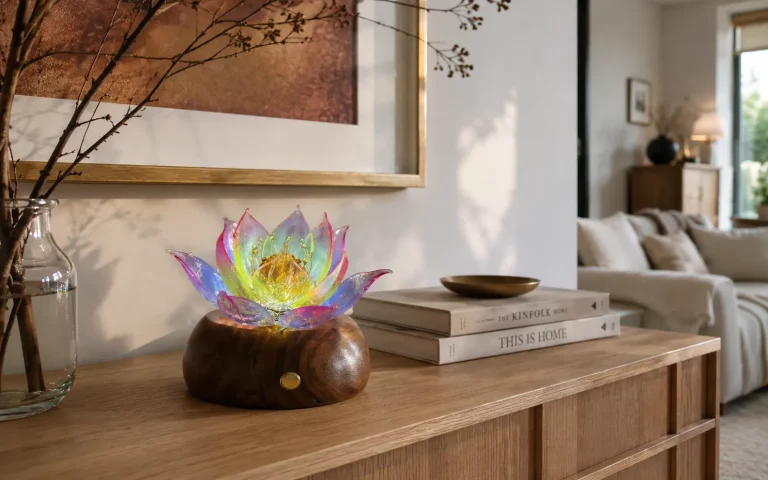
Meaningful Objects. Modern Stillness.Intentional spacebegins with the immediate, visceral clarity of how an environment communicates with the human body. Some rooms feel emotionally heavier and louder than others, induced by the overwhelming friction of visual noise. Nothing is obviously broken, yet the moment you step across the threshold, your shoulders instinctively tighten, your focus scatters, and the atmosphere carries an exhausting weight. This is the hallmark of digital burnout encroaching on personal sanctuaries, calling for objects that deliver true sensory certainty.
The Emotional Weight of Intentional Space
A room routinely holds far more than physical furniture; it accumulates the invisible pressure of unfinished tasks, scattered signals, and modern overstimulation. This is where the core philosophy of an Intentional Space becomes essential. It is the deliberate curation of what enters your environment, ensuring your immediate surroundings support your internal state rather than continually draining your nervous system.
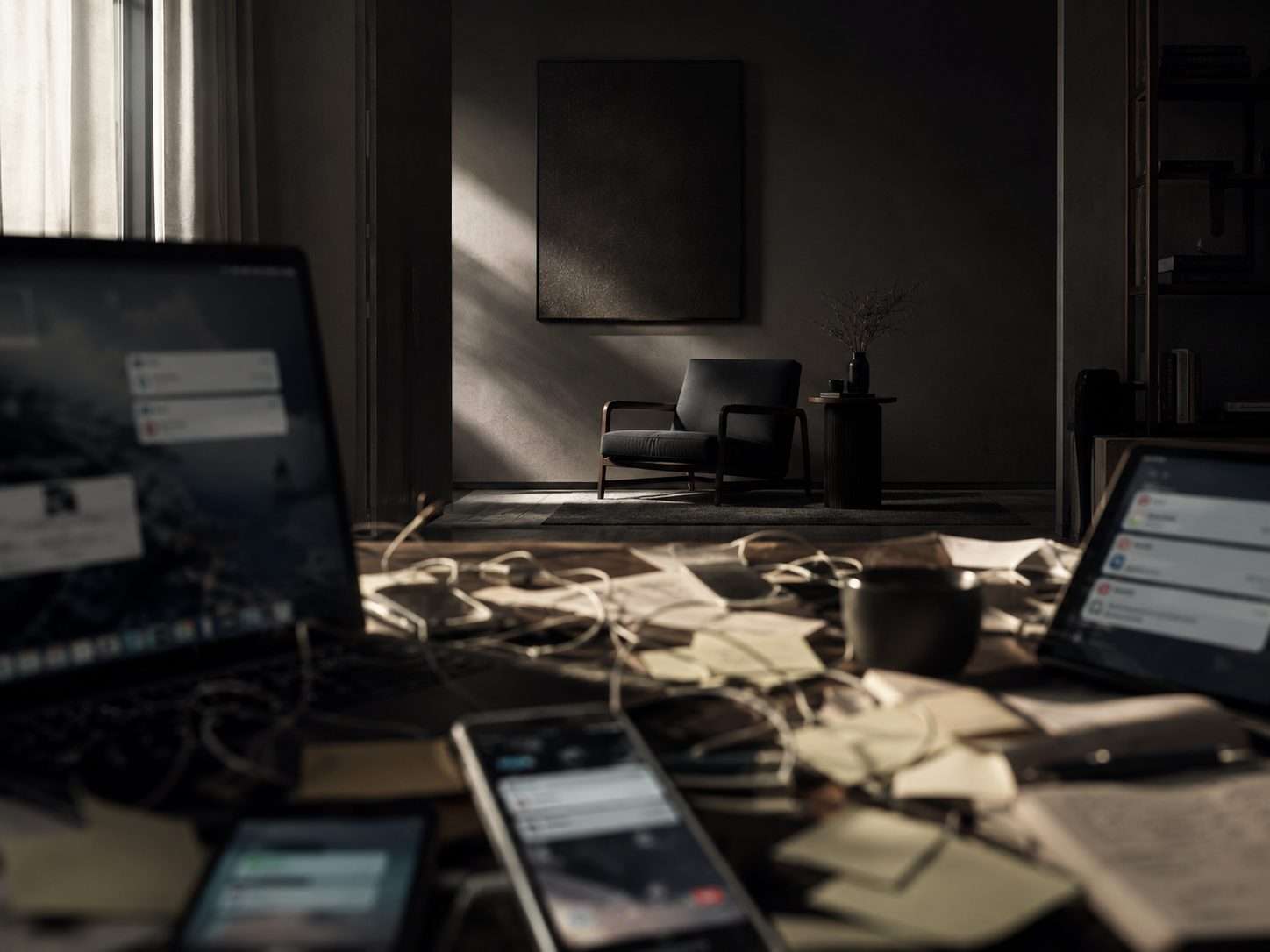 Atmosphere: The Quiet Weight of Space
Too much aggressive brightness can feel uncomfortably sharp to the mind. Persistent, unrestrained reflections keep the eye in a state of hyper-vigilance. Meanwhile, unfinished synthetic surfaces make the subconscious mind feel burdened by clutter. In stark contrast, introducing a single, quiet object can instantly shift the emotional temperature of an entire environment. A natural mineral on a table, a premium obsidian bracelet resting beside a collection of books, or a heavy dark wood surface catching a directional beam of window light steadies the atmosphere without demanding active attention.
A calibrated Visual Anchor gives the tired eye a specific, stable place to rest. Simultaneously, a system of Tactile Grounding gives the body physical certainty amidst chaos. Together, these design principles quietly reshape the underlying emotional architecture of any modern interior.
Why Some Rooms Feel Digitally Draining
Certain spaces feel intensely tiring because nothing within the field of vision feels settled. The eye continuously darting from glowing screens to exposed cables, and from bright synthetic packaging to raw unfinished corners, creates a persistent state of low-grade friction. The room may appear normal on the surface, but the body registers it as ambient noise. Consequently, professionals and urban minimalists frequently clear their surroundings following periods of high-stress exhaustion. They purposefully clear surfaces, remove loud saturated colors, and minimize objects because the nervous system craves fewer artificial signals to process.
 Visual Noise: What the Eye Carries
Objects as Emotional Architecture
Objects do not merely occupy empty coordinates; they fundamentally dictate how a room breathes. A dark, high-density stone can instantly ground an airy corner. Clear, architecturally honest materials make a chaotic workspace feel significantly lighter. Warm, geometric metal details beautifully soften an otherwise stark, clinical surface. These are quiet, minimal choices, but they carry immense weight. Over time, the true emotional frequency of a room is built entirely through deliberate details that seem too quiet to notice at first glance.
At 9Purple, we understand meaningful objects as critical components of personal atmosphere. A piece can be worn on the pulse, placed on a brutalist stone slab, or quietly observed — not to fill a physical void, but to provide the entire space with a serene, immovable center.
How Intentional Space Eliminates Visual Noise
Creating an intentional space is not about enforcing a cold, sterile vacuum. Instead, it is an engineering problem of reducing the sensory signals the human body must process. A room can easily carry rich narrative, warmth, and memory while maintaining absolute visual stillness. For a general reference on how visual surroundings affect human attention and baseline cognition, the Britannica overview of perception offers a useful scientific starting point. What the eye receives directly dictates how the mind organizes internal peace.
When too many disparate objects compete for dominance, the mind remains trapped in reaction. Therefore, the room feels significantly heavier than it looks. A single calm mineral, a softer texture, or one clear focal point completely changes that rhythm. This is why cultivating an intentional space relies equally on ruthless removal and precise selection. You strip away what creates sensory static, and you preserve the artifacts that anchor grounded attention.
The Psychological Need for Quiet Surfaces
Modern corporate life is congested with weightless surfaces that demand immediate, transactional responses. Screens want touch; notifications want reaction; interfaces want decisions. Quiet surfaces behave entirely differently. Raw stone, weathered wood, matte plum metals, and natural mineral crystal textures do not demand interaction. Instead, they project absolute material presence. For this reason, individuals are returning to materials that carry physical permanence, asking the human body to slow down and breathe.
 Material Mood: Quiet Surfaces, Softer Attention
Designing an Environment That Holds You
An intentional room requires a calculated rhythm rather than flawless perfection. It demands one deliberate area for the eyes to rest, one tactile artifact that carries weight, and a quiet ritual that signal to the brain that the day has shifted. This is the deeper mandate of Intentional Space. It is not about controlling every square millimeter; it is about curating enough environmental stillness for the mind to safely return to itself.
This environmental stillness becomes profoundly transformative when integrated into daily rituals. A room shifts when an object is placed with absolute care, or when a surface is intentionally cleared. These small choices tell the body that the space has a center, teaching the room how to feel. To understand how these principles translate from spatial architecture into personal wearable objects, explore our comprehensive guide to natural stone bracelets.
Intentional Space: Common Questions
Why do some rooms feel emotionally heavy?
Rooms feel emotionally heavy due to excessive visual clutter, jarring lighting, and too many objects competing for attention. The nervous system processes this visual noise as continuous, low-grade cognitive stress.
Can specific objects change the feeling of a room?
Yes. Authentic natural minerals, heavy materials, and low-key visual anchors guide how attention moves, shifting the environment from chaotic reaction to grounded permanence.
What is Intentional Space?
Intentional Space is the practice of curating textures, densities, and negative spaces to actively support an internal state of mental clarity and calm, prioritizing how a room feels over mere superficial decoration.
How do Visual Anchors support an intentional room?
A Visual Anchor provides a reliable coordinate for the eye to rest within a noisy space. By placing these anchors deliberately, you dictate the spatial harmony and relaxation rhythm of the entire room.
How does 9Purple approach intentional space design?
9Purple engineers meaningful objects with raw material presence and quiet visual stillness. Every mineral artifact is selected to act as an immovable spatial center for modern daily rituals.