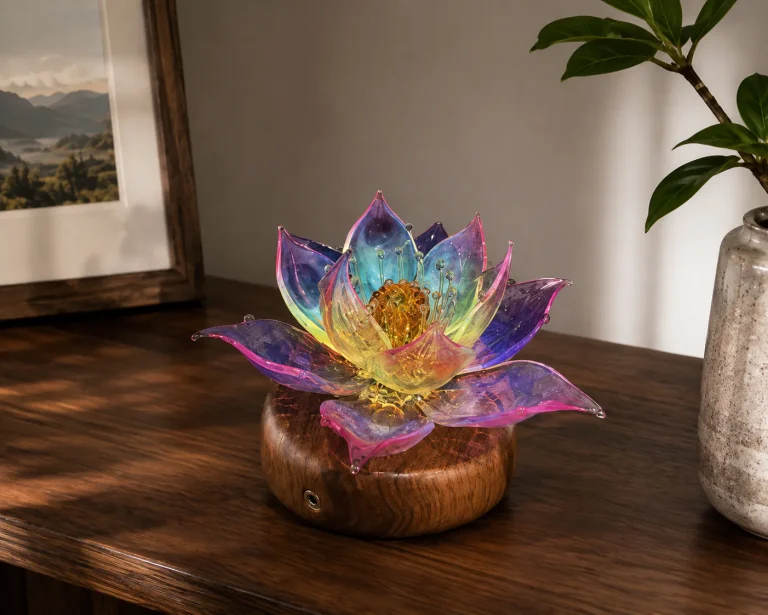
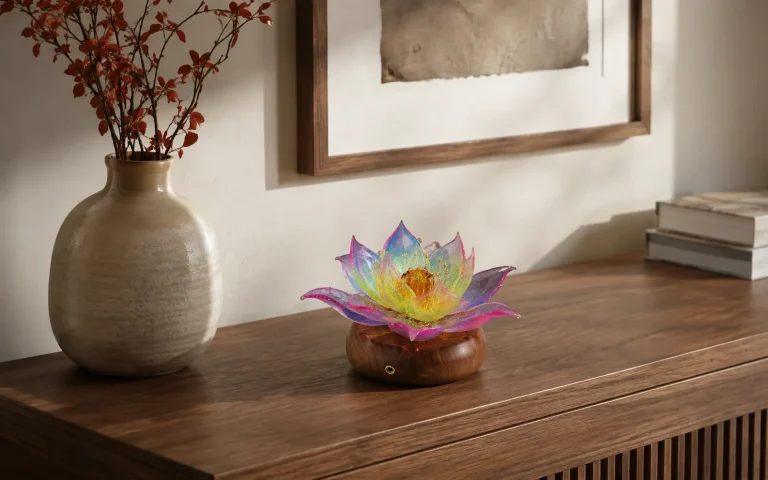
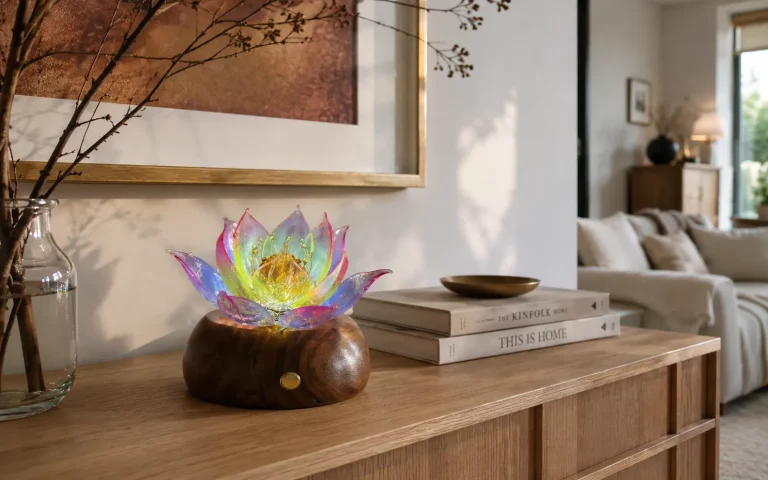
To choose a glass lotus light for your room, begin with the atmosphere you want rather than selecting color alone. A pale lotus can soften a light bedroom, while smoky glass may feel more settled against dark wood. Meanwhile, layered multicolor glass creates a stronger visual point after dark.
Placement matters as well. A glass lotus light works best on a bedside table, shelf, study desk, or side table where the handmade petals remain visible at close range. Because it creates localized decorative light, it should support the room rather than replace its main lighting.
This guide compares Lunar, Aurora, Noir, Prism, Rosefire, and Vermilion Rose by color, room character, placement, and visual presence.
Start With The Room, Not The Product Photograph
Product photographs help you understand the glass color and structure. However, the surrounding room changes how that color feels. Pale walls, dark wood, warm artificial light, cool daylight, and nearby objects can all influence the final impression.
Therefore, first look at the surface where the glass lotus will sit. Consider the wall behind it, the amount of empty space around it, and whether you will mainly view it during the day or after dark.
Observe The Background
Light walls support pale and cool glass, while deeper backgrounds often give smoky or warm colors more contrast.
Check The Material
Walnut, pale stone, ceramic, linen, and restrained shelving usually complement handmade glass without competing with it.
Consider When You See It
Daylight emphasizes transparency and petal structure. Internal light makes color transitions and layered edges more visible after dark.
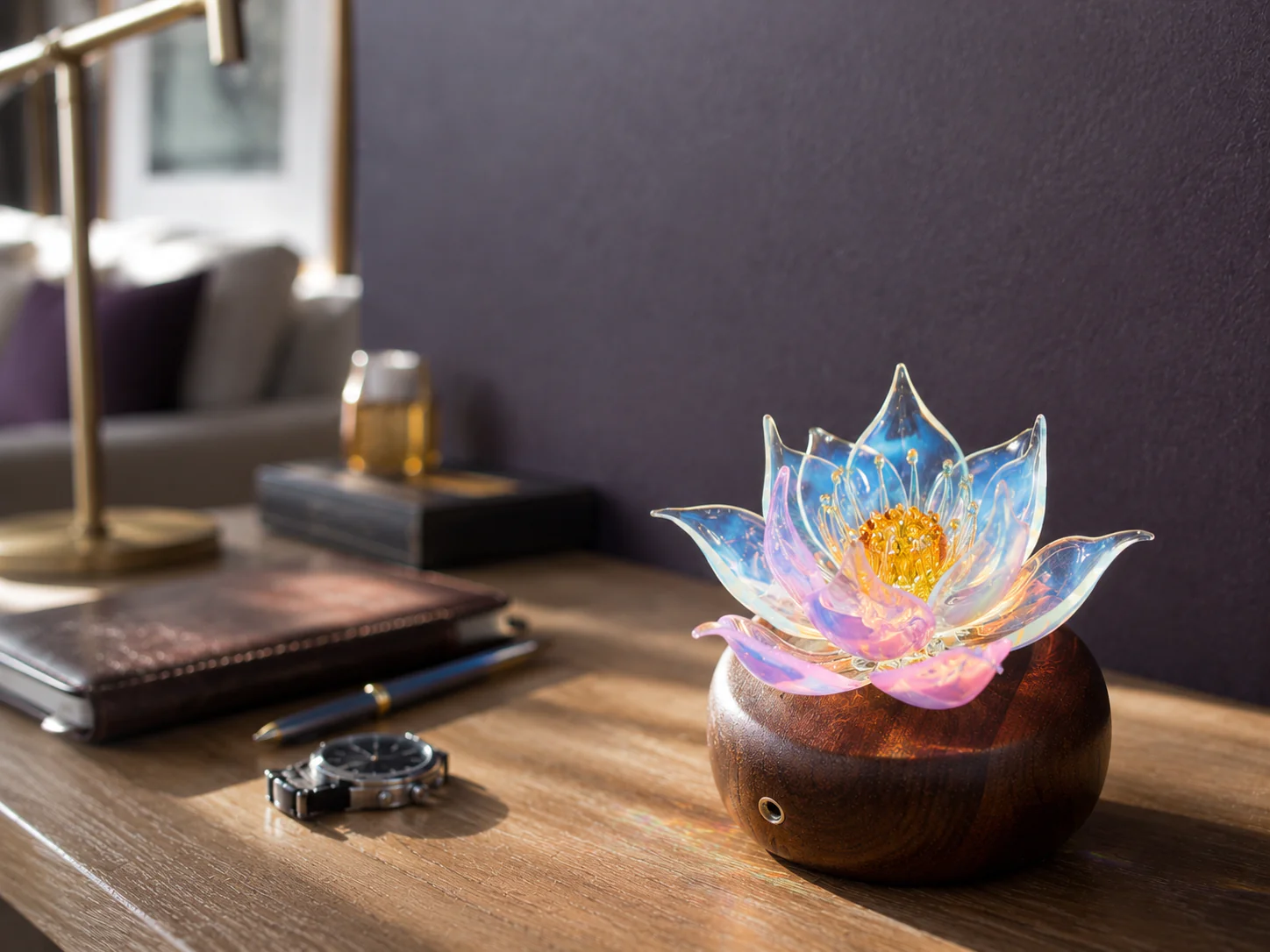
Choose A Glass Lotus Light By Atmosphere
Each 9Purple glass light follows a related material language, but the color balance changes its role in the room. The following comparison provides a practical starting point.
Lunar Lotus
Lunar uses frosted white glass with pale blue edges. It offers the quietest and lightest color expression in the collection.
It works especially well with ivory walls, pale timber, linen, off-white bedding, and rooms that already receive soft natural light.
View Lunar Lotus →Aurora Lotus
Aurora combines blue-white glass, softer violet-pink lower petals, and a warm center. It adds visible color without becoming the brightest object in the room.
Choose it for balanced bedrooms, shelves, warm wood furniture, or a room that needs a cooler accent with some warmth at the center.
View Aurora Lotus →Noir Lotus
Noir uses smoky gray and white glass with darker petal edges. It brings greater contrast and visual weight than the pale lotus models.
It suits dark wood, gray interiors, focused study spaces, evening shelves, and rooms with a restrained or more architectural character.
View Noir Lotus →Prism Lotus
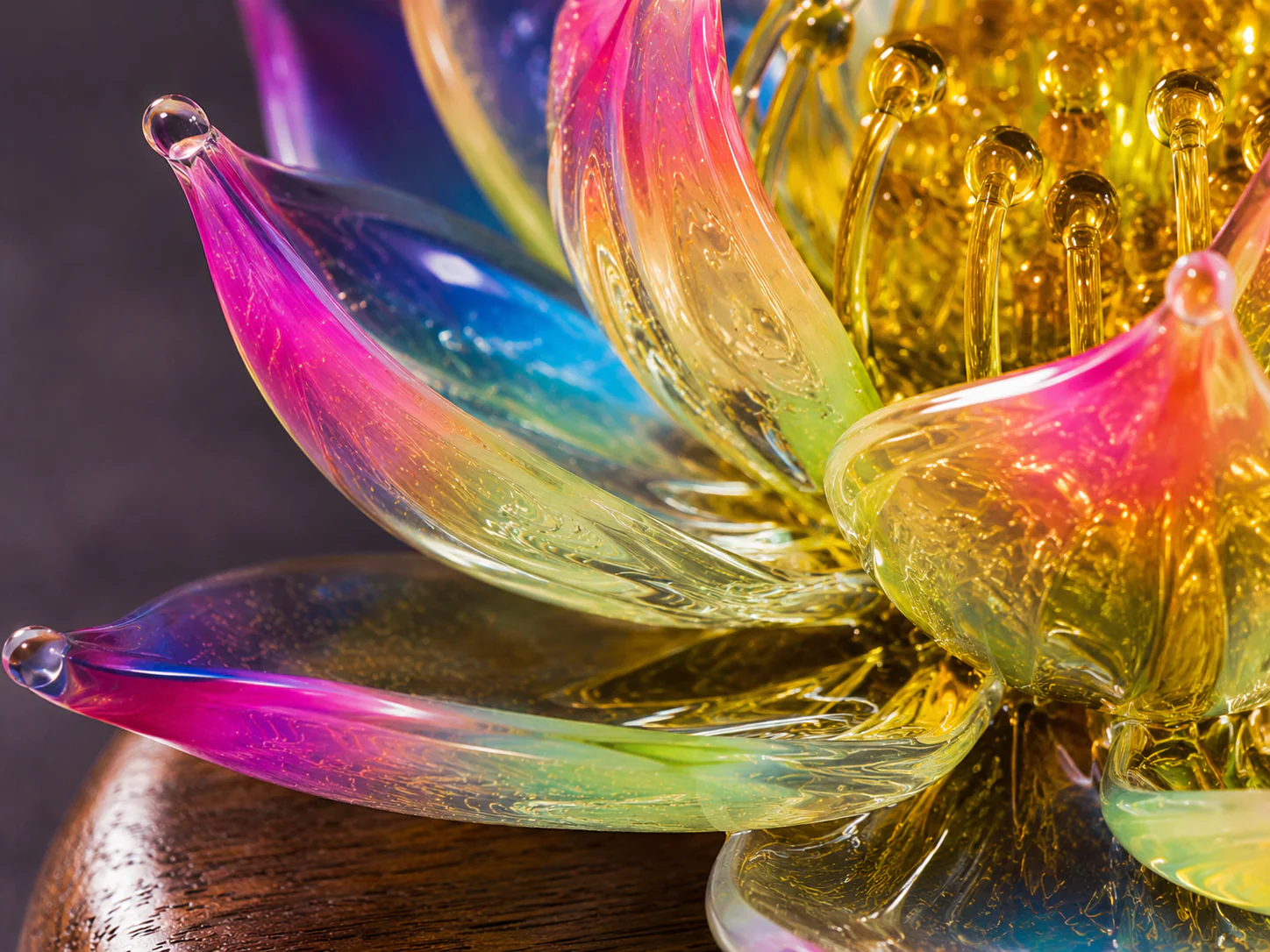
Prism combines pink-edged petals with pale green, warm yellow, and multicolor transitions. It creates the strongest color movement in the lotus collection.
Choose it for neutral rooms that need color, creative spaces, display shelves, or recipients who prefer a more vivid decorative object.
View Prism Lotus →Rosefire Lotus
Rosefire combines rose, violet, and pink-purple tones with a warm center. Its color feels softer than a bright red accent but warmer than Aurora or Lunar.
It fits intimate bedrooms, dressing areas, side tables, warm neutral shelves, and meaningful gift settings.
View Rosefire Lotus →Vermilion Rose
Vermilion Rose replaces the open lotus silhouette with a taller red glass rose. As a result, it creates a more graphic vertical point.
It works well on narrow shelves, desks, side tables, consoles, or spaces where a taller accent feels more natural than a wide flower.
View Vermilion Rose →Compare The Collection At A Glance
| Model | Main Color Direction | Best Room Character | Visual Presence |
|---|---|---|---|
| Lunar Lotus | Frosted white and pale blue | Light, calm, pale, softly furnished rooms | Quietest |
| Aurora Lotus | Blue-white, violet-pink, warm center | Balanced bedrooms, warm wood, neutral interiors | Soft to moderate |
| Noir Lotus | Smoky gray, white, darker edges | Dark wood, gray rooms, focused study areas | Deep and restrained |
| Prism Lotus | Pink, pale green, warm yellow, multicolor | Neutral rooms, creative spaces, display shelves | Strongest color |
| Rosefire Lotus | Rose, violet, pink-purple | Warm neutral rooms, intimate corners, gifting | Warm and expressive |
| Vermilion Rose | Deep red vertical rose form | Narrow shelves, desks, consoles, side tables | Graphic vertical accent |
Choose By Placement
Bedside Table
For a bedside table, choose a model that supports the room rather than competing with bedding, wall color, and existing lamps. Lunar and Aurora usually create the quietest transition. Rosefire works well when the room already contains warmer textiles or pink-purple accents.
Study Desk
A study desk benefits from a contained shape and enough empty surface around the object. Noir provides greater contrast in darker workspaces, while Aurora introduces color without becoming visually dominant.
Shelf Or Sideboard
Shelves and sideboards allow more visual distance. Therefore, Prism can hold its own among books, ceramic objects, and neutral decor. Vermilion Rose also works well when the shelf needs a taller shape.
Entry Table Or Console
An entry table often needs a clear silhouette. Choose Prism for color, Noir for restraint, or Vermilion Rose for a narrow vertical accent.
Understand The Brightness Before You Order
A 9Purple glass lotus light creates a localized decorative glow. It does not provide enough light to replace a bedside reading lamp, desk lamp, or ceiling light.
Instead, the internal light reveals the structure of the glass. Thinner petal edges transmit more light, while thicker or overlapping sections hold more color. Consequently, the object becomes more visually active after dark without functioning as primary room lighting.
What The Light Is Designed To Do
The light supports atmosphere, reveals the handmade petals, and creates a small point of color on a nearby surface.
It works best when the room already has functional lighting and the glass lotus serves as a secondary decorative object.
Check The Size And Surrounding Space
Compact glass lotus light models measure approximately 12 × 12 cm. Although the object does not require a large surface, the petals need some open space around them.
Avoid placing the lotus directly beside unstable stacks, loose cables, frequently moved objects, or the edge of a narrow table. In addition, leave enough visual space so the flower does not disappear inside a crowded arrangement.
A Suitable Surface Usually Has:
- A stable, level position away from the edge.
- Enough room around the glass petals.
- A nearby USB charging option when needed.
- A background that does not visually hide the flower.
- Protection from frequent knocks, pets, or moving objects.
Choose By Daylight And Evening Use
If you mainly see the object during the day, focus on transparency, petal shape, and how the color works with the room. Lunar, Aurora, and Noir all provide clear material structure without relying on strong illumination.
However, if you mainly use the light after dark, consider how much color you want. Prism produces the strongest layered color, while Rosefire adds warmer atmosphere. Noir creates deeper contrast, and Lunar remains the softest.
Choosing A Glass Lotus As A Gift
When buying for another person, choose according to their room and visual preferences rather than assigning a fixed symbolic meaning.
For example, Lunar is a safer choice for someone who prefers pale, restrained interiors. Aurora suits a recipient who likes cool color without strong saturation. Prism works for someone who enjoys vivid glass, while Rosefire provides a warmer and more intimate expression.
A Simple Gift Selection Method
Choose Lunar When You Are Unsure
Its pale color adapts easily to bedrooms, shelves, and light neutral interiors.
Choose Aurora For Balanced Color
Aurora adds enough blue, violet, and warmth to feel distinctive without becoming highly saturated.
Choose Prism For A More Expressive Recipient
Prism makes the strongest statement and works well for someone who already enjoys color, glass, or decorative objects.
Choose Rosefire For Warm Personal Gifting
Its pink-purple direction suits birthdays, intimate spaces, and warmer room palettes.
Remember That Each Piece Is Handmade
9Purple artisans shape and assemble the borosilicate glass by hand. Therefore, each piece may show small differences in petal curve, translucency, layering, color transition, texture, and internal bubbles.
These variations belong to the production process and do not make one piece incorrect simply because it does not match every small detail in a product photograph.
To understand these differences in more detail, read why lampworked borosilicate glass makes every lotus light different .
Review The Made-To-Order Terms
9Purple begins producing each glass object after the customer places an order. Consequently, confirmed glass orders are final sale except in verified cases of transit damage, confirmed defect, or an incorrect item.
Orders ship from mainland China. Available destinations, shipping charges, free-shipping thresholds, and estimated delivery times appear during checkout.
Before purchasing, review the complete Refund & Return Policy .
Compare Every Glass Lotus Light
View the full collection by color, room atmosphere, placement, brightness, material, and made-to-order details.
Explore Glass Lotus DecorFAQ: Choosing A Glass Lotus Light
Which glass lotus light is best for a bedroom?
Lunar works well in pale, quiet bedrooms. Aurora adds balanced cool color, while Rosefire suits warmer and more intimate room palettes. The best option depends on the wall color, bedding, furniture, and amount of visual contrast you prefer.
Which glass lotus light has the strongest color?
Prism Lotus has the strongest multicolor presence. Its pink, pale green, warm yellow, and layered color transitions become especially visible after dark.
Which glass lotus light is the most neutral?
Lunar Lotus has the palest and most restrained color direction. Aurora is another flexible option when you want some visible blue and violet color without strong saturation.
Which model suits a dark or gray interior?
Noir Lotus usually provides the most natural fit for dark wood, gray rooms, focused study spaces, and interiors with deeper visual tones.
Can a glass lotus light replace a bedside lamp?
No. It creates localized decorative light and reveals the glass structure. It does not replace a reading lamp, desk lamp, ceiling light, or other functional room lighting.
How much space does a glass lotus light need?
Compact lotus models measure approximately 12 × 12 cm. However, leave additional open space around the petals and place the object on a stable surface away from the edge.
Is Vermilion Rose a glass lotus light?
Vermilion Rose belongs to the illuminated glass collection, but it uses a vertical rose silhouette instead of an open lotus form. Choose it when a taller, narrower accent better fits the room.
Where can I compare all available models?
Visit the Glass Lotus Decor guide to compare Lunar, Aurora, Noir, Prism, Rosefire, Vermilion Rose, and the studio glass vase object.