How Lampworked Glass Is Made: From Flame to Lotus PetalUnderstanding how lampworked glass is made begins with four elements: borosilicate glass, a focused flame, hand tools, and careful timing. The artisan heats only the working area of the glass, watches it soften, and then guides the material into shape.
The process differs from pressing a complete flower into one decorative mold. Instead, the maker forms individual petals, centers, stamens, stems, buds, and connection points before assembling them into a larger object.
At 9Purple, artisans use modern borosilicate glass and lampworking techniques to create Liuli-inspired decorative objects. This article follows the process from the first glass component to the final lotus structure.
What Is Lampworked Glass?
Lampworked glass, also called flameworked glass, refers to glass that a maker shapes at a focused bench flame. The artisan usually begins with rods, tubes, or partially formed components and works close to the heat source.
The Corning Museum of Glass definition of flameworking describes the process as forming objects from glass rods and tubes heated in a flame.
During lampworking, the artisan must control distance, temperature, rotation, timing, and tool pressure. These decisions determine whether the glass remains stable, opens into a petal, stretches into a stem, or joins cleanly with another part.
Focused Flame
The artisan heats a specific working area instead of softening the entire object at once.
Continuous Control
Rotation, pulling, bending, pressing, and repositioning guide the softened glass.
Short Working Window
The maker must shape the material while it is responsive and adjust it before it becomes rigid again.
The Material Begins As Borosilicate Glass
9Purple glass lotus objects use modern borosilicate glass. The artisan may begin with clear or colored rods, pre-shaped elements, or other glass components selected for a particular part of the flower.
Borosilicate glass generally has lower thermal expansion than common soda-lime glass. It also suits controlled heating and detailed flame-based shaping. These properties support fine petal edges, small upright details, curved stems, and transitions between clear and colored areas.
However, material alone does not create the object. The maker must still control the heat, shape each component, manage connections, and inspect the final result.
How Lampworked Glass Is Made Step By Step
- 01
Preparing Glass Rods And Components
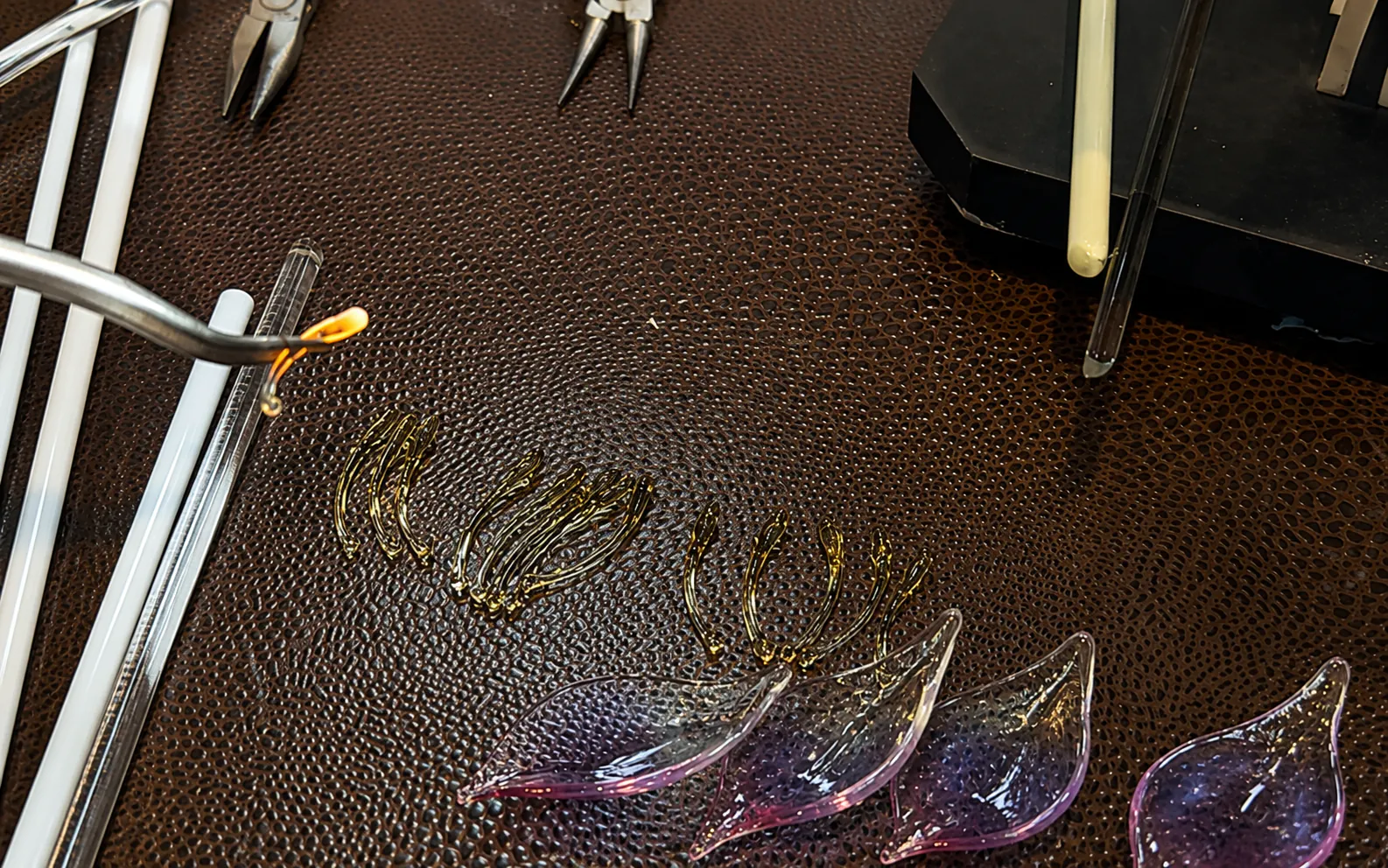
First, the artisan selects the glass needed for petals, centers, stems, stamens, buds, and connecting points. The color, thickness, and shape of the starting material influence the final component.
- 02
Heating The Working Area
Next, the maker brings a specific area of glass into the flame. The glass gradually becomes responsive. The artisan watches the surface, color, movement, and softness rather than relying on one fixed heating time.
- 03
Rotating And Stabilizing The Glass
As the glass softens, gravity begins to influence it. Therefore, the artisan rotates or repositions the component to keep the heated area balanced and prevent unwanted collapse.
- 04
Shaping The Petal
The maker pulls, presses, bends, or opens the softened glass. Tool pressure and hand angle determine the petal width, curve, direction, and edge.
- 05
Refining The Curve And Edge
After the first shape appears, the artisan returns selected areas to the flame. Small corrections refine the tip, thickness, opening angle, and relationship between the inner and outer curve.
- 06
Making Centers, Stamens, Stems, And Buds
A lotus requires more than petals. The maker forms smaller upright details, central elements, stems, buds, and structural connections through the same combination of focused heat and hand control.
- 07
Joining Individual Components
The artisan heats the connection points and joins separate parts into a larger flower. This stage requires balance because each new component changes the weight and visual direction of the structure.
- 08
Cooling, Inspection, And Final Assembly
Finally, the maker manages cooling according to the component and workshop process. After cooling, the piece undergoes visual and structural inspection before it joins the base or final decorative arrangement.
Heating The Glass Without Losing The Form
Heating is not simply the first step. It continues throughout the entire lampworking process. The artisan repeatedly moves the glass into and away from the flame to control which area remains soft.
Too much heat can make the glass lose the intended curve. Too little heat can leave the material too rigid to shape safely. Therefore, the artisan constantly adjusts distance, angle, movement, and exposure.
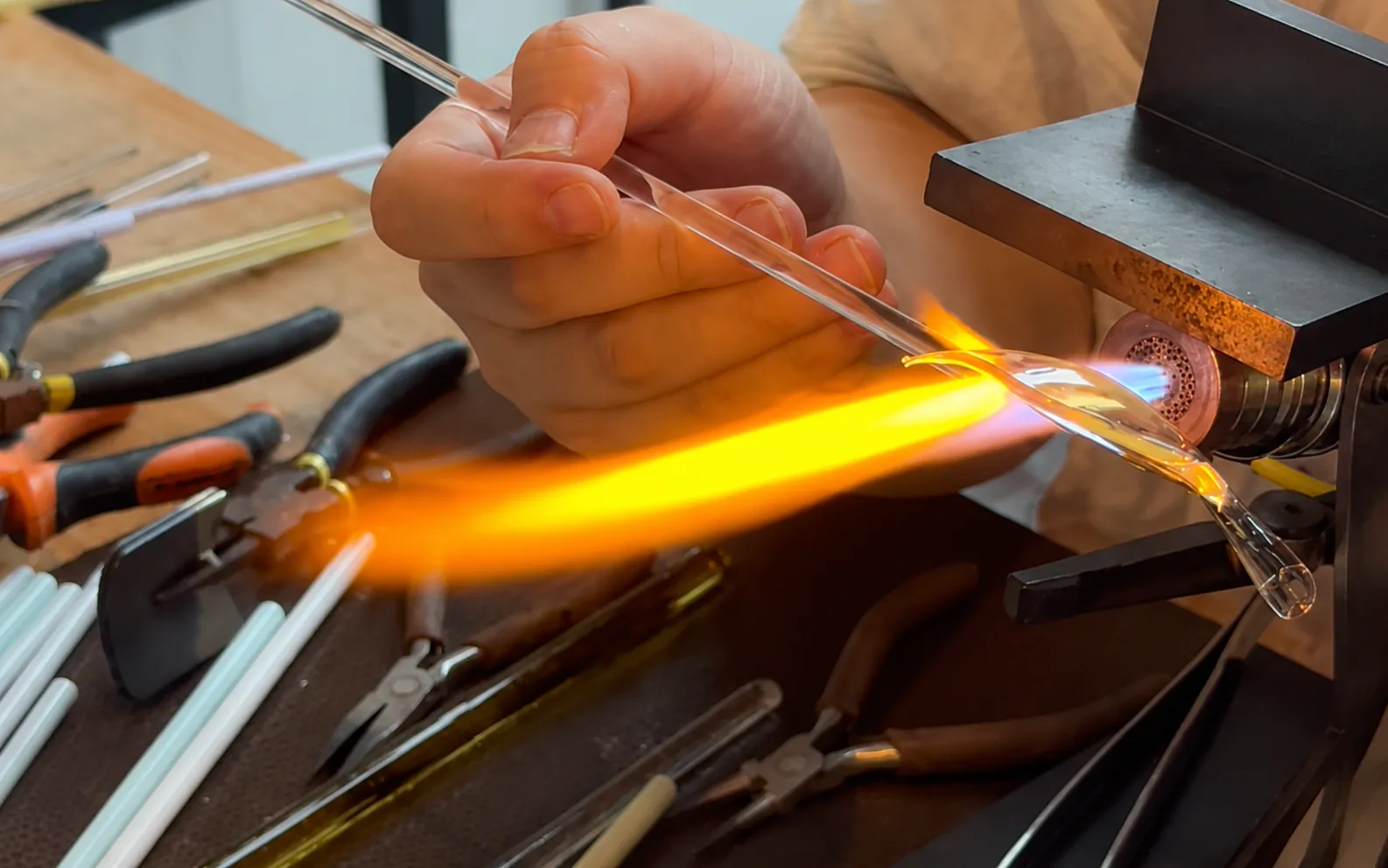
Why Rotation Matters
Softened glass responds to gravity. If the maker holds it in one position for too long, the form can shift or sag. Continuous rotation helps keep the material centered while the artisan prepares the next movement.
However, rotation does not remain identical for every part. A stem, petal, center, and bud each require a different balance between movement and stillness.
How A Glass Lotus Petal Takes Shape
A lotus petal begins as a smaller glass component. The maker heats the working area, opens or pulls the softened glass, and then uses tools to guide the outline.
Each movement changes the result. A stronger pull can create a longer tip. Additional pressure may flatten part of the surface. A change in angle can make the petal open upward or turn outward.
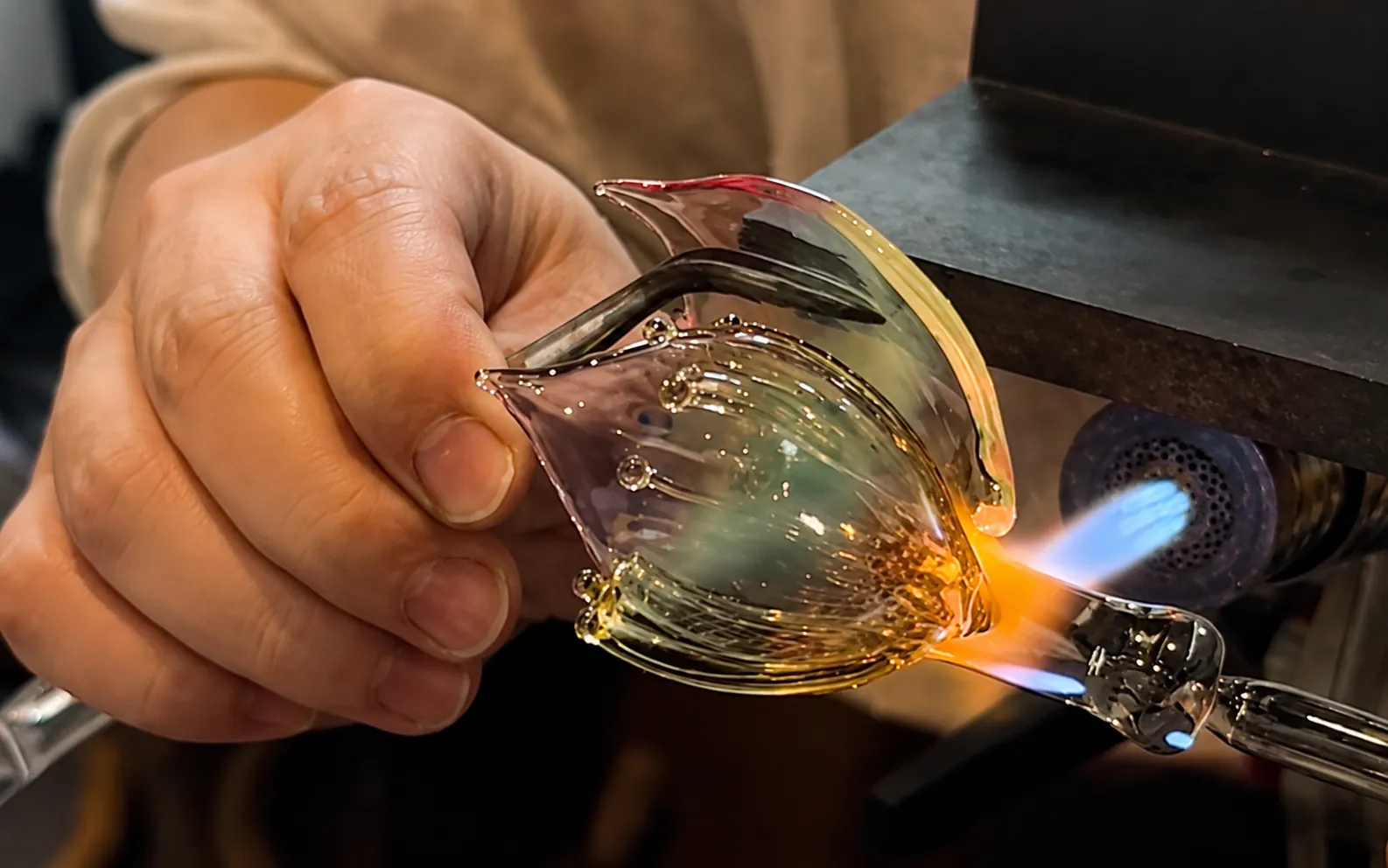
After the primary curve appears, the artisan may reheat only the tip, edge, or connection area. This selective heating allows further refinement without remaking the entire component.
A Petal Is Shaped, Not Printed
In lampworking, the maker does not apply a flower pattern to a finished glass surface. The petal itself becomes the structure. Its curve, thickness, edge, direction, and color transition all develop during heating and shaping.
How Color Enters The Structure
Lampworked color can appear through colored rods, layered glass, overlapping components, joined sections, or transitions between clear and colored material.
During heating, the artisan can stretch a color toward an edge, position it near the center, or combine it with another transparent section. As a result, color does not always remain uniform across one petal.
Thicker areas may hold more color, while thinner edges transmit more light. Overlapping petals can also create secondary shadows and deeper tones after assembly.
Making The Smaller Details
Small parts often require as much control as the larger petals. A lotus center may include upright glass details, while a bud needs a closed shape that remains visibly different from an open flower.
Stems and connection points must also support the final arrangement. Therefore, the maker considers both appearance and structure during shaping.
Petals
Petals create the outer silhouette and layered flower structure. Their width, curve, overlap, and opening direction determine the overall lotus form.
Centers And Stamens
Central details add visual depth. They must remain delicate enough to fit inside the flower while retaining enough clarity to stay visible through surrounding petals.
Stems And Buds
Stems introduce direction and height. Buds require a closed outline and controlled surface so they do not appear as smaller open flowers.
Joining The Parts Into One Lotus
After forming the individual components, the artisan joins them into a complete structure. The maker heats connection areas rather than indiscriminately reheating the whole flower.
This stage requires careful sequencing. Outer petals, inner petals, centers, stems, and smaller details must connect without obscuring one another or pulling the structure out of balance.
The artisan also considers how the finished flower will appear from different viewing angles. A lotus should retain a recognizable center, layered depth, and a stable overall silhouette.
Cooling And Inspection
Glass must move from a heated working state to a stable finished state. The maker manages this transition according to the component, material, and workshop process.
After cooling, the artisan checks the piece for visible cracks, unstable connections, broken details, incorrect alignment, and other structural problems.
Small differences in petal curve, thickness, transparency, texture, and color transition can remain because artisans shape the components by hand. However, handmade variation is different from damage or a confirmed structural defect.
What The Final Inspection May Check
- The overall lotus silhouette and balance.
- The stability of joined petals and central details.
- The condition of visible edges and connection points.
- The alignment of stems, buds, or upright components.
- The relationship between the glass object and its base.
- The function of the illuminated base when the model includes one.
Lampworking Is Different From Molding And Glassblowing
Several glassworking methods can produce valuable objects. The main difference lies in how the maker forms the material.
| Method | Basic Process | Typical Forming Character |
|---|---|---|
| Lampworking | A focused flame softens rods, tubes, or small components that the artisan shapes at close range. | Supports detailed parts, fine curves, stems, petals, centers, and separately formed components. |
| Molding | A mold reproduces a defined surface or overall shape. | Supports consistent repetition across many units. |
| Glassblowing | The maker uses air, rotation, heat, and tools to expand and shape heated glass. | Often supports hollow vessels, rounded forms, and larger volumes. |
| Kiln-forming | Glass changes shape inside a kiln through heating, slumping, fusing, or casting processes. | Supports panels, fused forms, molds, layered sections, and kiln-shaped objects. |
These methods are not interchangeable descriptions. Therefore, 9Purple glass lotus objects should use the correct technical language: lampworked borosilicate glass.
Why Two Handmade Lotus Pieces May Differ
Even when artisans follow the same product design, heat and hand movement introduce natural variation. One petal may open slightly higher. A color transition may appear closer to an edge. An inner layer may show more depth from one viewing angle.
These differences do not mean the artisan ignored the design. Instead, they show that the object passed through a real sequence of heating, shaping, refining, joining, and inspection.
For a detailed explanation of handmade variation, read Why Lampworked Borosilicate Glass Makes Every Lotus Light Different .
What The Making Process Means For Buyers
Each Piece Follows A Design, Not An Exact Mechanical Duplicate
Product photographs show the intended color direction, form, dimensions, base, and overall structure. However, every small curve and internal detail may not match another piece exactly.
Handmade Variation Is Different From Damage
Small differences in petal direction, transparency, color transition, or texture can occur. A major crack, broken component, separated part, or confirmed functional failure requires a different assessment.
The Glass Lotus Is Made After Ordering
9Purple begins producing each glass object after the customer places an order. Therefore, buyers should review the product specifications and made-to-order terms before completing checkout.
The Internal Light Is Decorative
Illuminated lotus models create localized light that reveals the glass structure. They do not replace a desk lamp, bedside reading light, ceiling fixture, or primary room lighting.
From Craft Process To Finished Glass Lotus
The completed object brings together several types of work. The artisan must understand how the glass softens, how each part responds to tools, and how separate components connect into one recognizable lotus.
The final flower may appear visually simple, but that simplicity depends on many small decisions. Material selection, heating, rotation, shaping, edge refinement, component balance, joining, cooling, inspection, and base assembly all contribute to the result.
To compare the material and forming method with typical decorative glass, read Liuli-Inspired Glass vs Ordinary Decorative Glass .
To choose between Lunar, Aurora, Noir, Prism, Rosefire, and Vermilion Rose, visit How to Choose a Glass Lotus Light for Your Room .
See the Finished Form: Prism Lotus
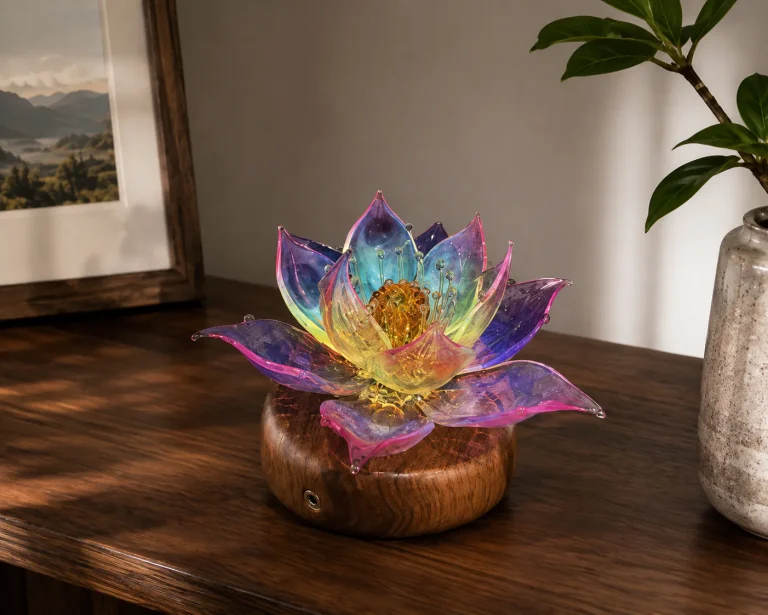
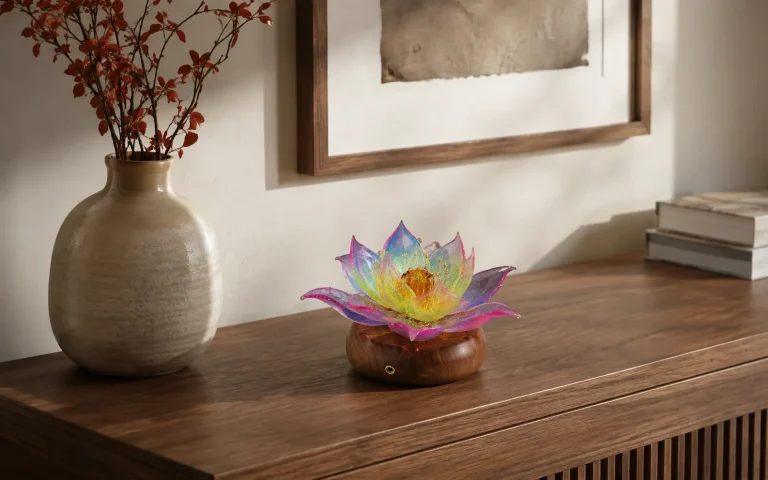
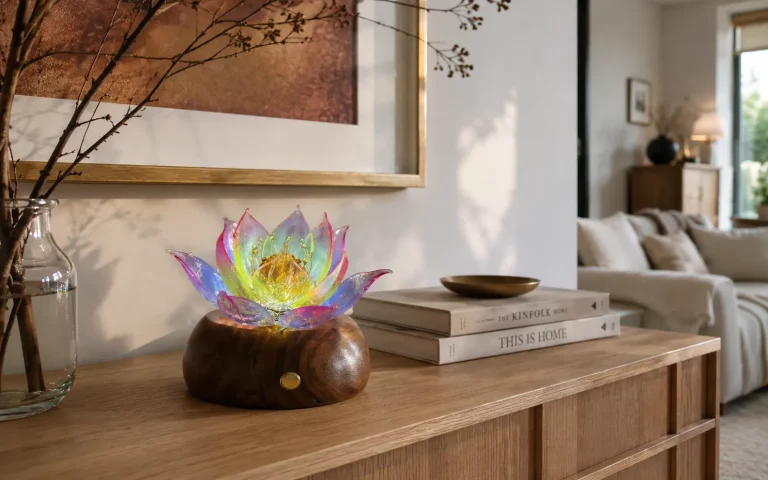
Prism Lotus turns the lampworking process described above into a handmade borosilicate glass lotus lamp, displayed on a rechargeable walnut light base and made to order.
Explore Handmade Glass Lotus Decor
Compare the complete collection by color, material, room placement, lighting purpose, and made-to-order details.
View Glass Lotus DecorFAQ: How Lampworked Glass Is Made
What is lampworked glass?
Lampworked glass is glass that an artisan shapes at a focused flame. The maker heats rods, tubes, or components and then uses rotation, tools, pulling, pressing, bending, and hand movement to create the form.
How is lampworked glass made?
The process includes preparing glass components, heating the working area, stabilizing the softened glass, shaping and refining each part, joining components, managing cooling, and inspecting the finished object.
Is lampworked glass the same as glassblowing?
No. Lampworking usually shapes rods, tubes, and smaller components at a focused bench flame. Glassblowing often uses air and rotation to expand heated glass into hollow or larger-volume forms.
Is 9Purple glass kiln-cast?
No. The correct description is lampworked borosilicate glass. Liuli-inspired describes the visual and cultural language of the collection, not a kiln-casting process.
Why is borosilicate glass used for lampworking?
Borosilicate glass supports controlled heating and detailed shaping. It also allows artisans to form fine edges, curved petals, stems, centers, and small structural components.
Are lampworked glass lotus pieces identical?
No. They follow the same design, dimensions, color direction, and structure, but small differences in curve, thickness, transparency, color transition, and internal detail can appear.
Does handmade variation mean the glass is damaged?
No. Natural variation can include small differences in shape, texture, color, or transparency. Damage includes issues such as a broken petal, major crack, separated component, or confirmed functional failure.
Where can I view the finished Glass Lotus collection?
Visit the Glass Lotus Decor guide to compare all current models by material, color, placement, lighting purpose, and ordering details.