A handmade glass gift can feel personal without becoming overly intimate. Unlike a temporary bouquet or a highly specific personal item, a glass object can remain in the recipient’s home, change with the light, and gradually become part of their daily surroundings.
However, choosing the right piece requires more than selecting the brightest color or the most elaborate shape. The recipient’s room, furniture, habits, and visual preferences matter just as much as the occasion itself.
This handmade glass gift guide explains how to choose a glass lotus light, glass rose, or studio glass vase object for a housewarming, anniversary, birthday, new workspace, or personal milestone. It also covers color, scale, lighting purpose, handmade variation, shipping, and the practical details to consider before ordering.
What Makes a Handmade Glass Object a Meaningful Gift?
A meaningful gift does not always need an elaborate explanation. In many cases, its value comes from the way it continues to be noticed and used over time.
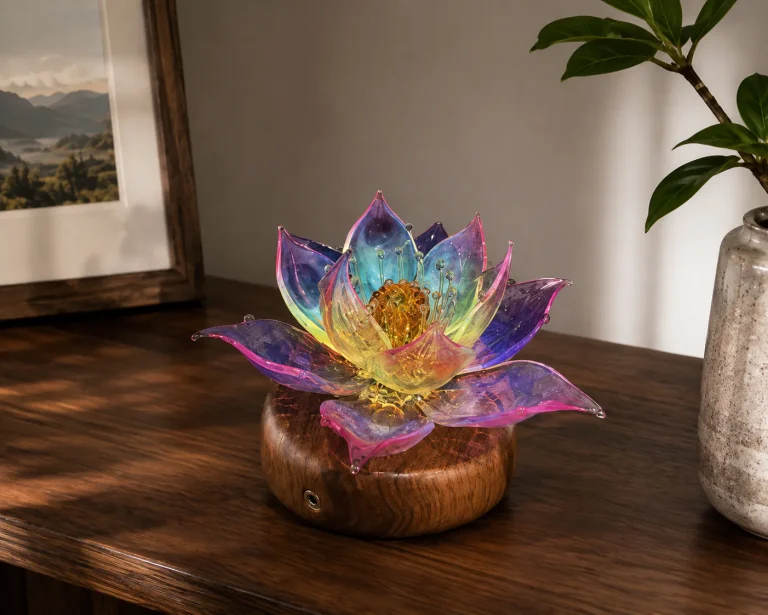
First, glass responds to changing conditions. Transparency, reflection, petal thickness, overlapping color, daylight, and evening illumination all affect how the object appears. The same piece may look pale and detailed in the morning, more saturated near a window, and warmer after dark.
Second, handmade production creates small differences between pieces. Petal curves, transitions between colors, surface texture, transparency, and internal details may vary slightly. These differences do not change the intended design, but they prevent the object from feeling entirely standardized.
Finally, glass offers a material presence that is decorative without being disposable. A carefully chosen piece can remain on a bedside table, shelf, desk, console, or cabinet long after the original occasion has passed.
As a result, a handmade glass gift can mark a moment without forcing the recipient to preserve one fixed interpretation of it.
Start With the Recipient, Not the Occasion
Instead of beginning with labels such as “anniversary gift,” “birthday gift,” or “housewarming gift,” start with the person who will receive the object. After all, those labels do not tell you what the recipient will actually enjoy living with.
What Colors Do They Live With?
Notice whether their home is pale, neutral, warm, dark, or highly colorful before selecting the glass.
Where Could the Object Sit?
Look for a stable bedside table, shelf, desk, sideboard, or console with enough open space around the piece.
Do They Prefer Low or Tall Objects?
A compact lotus uses more width, while a glass rose or vase object creates a clearer vertical silhouette.
Would Decorative Light Suit Them?
Choose an illuminated lotus for localized atmosphere, or a non-illuminated vase object for a purely sculptural presence.
Therefore, these observations are usually more useful than choosing according to the occasion alone. For example, a restrained blue-white lotus may suit a recipient with a quiet pale bedroom, even when the gift is for an anniversary. Meanwhile, a multicolored lotus may be more appropriate for a housewarming if the recipient already enjoys expressive glass and colorful interior details.
In other words, the occasion provides context. By contrast, the recipient’s space determines whether the gift feels natural after it arrives.
Choosing a Handmade Glass Gift by Occasion
Choose Adaptability
Compact forms and pale, smoky, or balanced colors are easier to move between bedrooms, shelves, studies, and living-room surfaces.
Choose a Clearer Visual Identity
A warm lotus or vertical glass rose can feel intimate without relying on jewelry, cut flowers, or highly conventional romantic imagery.
Choose by Personality
Match the recipient’s real preference for restrained, smoky, warm, or expressive color rather than assigning a symbolic system.
Choose a Secondary-Surface Object
A compact lotus or narrow glass rose can mark a new office or studio without entering the main work zone.
Housewarming
A housewarming gift should work with a space that may still be changing. Because furniture, artwork, and room arrangements are not always finalized, adaptable colors and compact forms are often easier to place.
For recipients who enjoy small atmosphere objects, a glass lotus light can be especially suitable. In addition, it adds color and localized evening light without requiring wall installation or permanent placement. By comparison, a studio glass vase object may suit a more design-led home with larger surfaces, although it requires more height and visual space than a compact lotus.

Anniversary
For an anniversary, a stronger visual identity can make the gift feel more considered. If the recipient prefers a familiar floral form and a more vertical silhouette, a glass rose may be appropriate. Meanwhile, warm rose, violet, or red tones can create a more intimate impression without relying on conventional jewelry or cut flowers.
A lotus light offers a less literal alternative. Its layered petals and changing illumination can suggest continuity, change, or shared space without assigning a rigid symbolic meaning.
Birthday
Birthday gifts can be selected more directly according to personality. For example, someone who enjoys color, glass, craft, and changing light may prefer a vivid multicolored lotus. By contrast, a recipient with a calmer home may appreciate frosted white, pale blue, or smoky gray glass.
Consequently, rather than trying to match a birth month, zodiac sign, or symbolic system, choose according to the person’s actual visual preferences. This approach makes the gift easier to understand and easier to place.
New Workspace or Studio
A handmade glass object can mark the beginning of a new workspace, office, or creative studio. In this setting, the gift should remain outside the main working zone.
A compact lotus light can sit on a side cabinet, back credenza, shelf, or secondary desk surface. In this position, it can provide a visual point away from screens without occupying the area needed for equipment, documents, or tools.
Personal Milestone
Similarly, a move, graduation, new chapter, creative achievement, or private transition may not fit a conventional gift category. In these situations, a glass lotus can carry symbolic possibilities without requiring the recipient to accept one fixed meaning.
The open flower may suggest renewal or change, while the glass itself introduces transparency, variation, and changing light. Keep the message simple, and avoid explaining the recipient’s experience for them.
Choose by Room and Interior Style
Bedroom
Bedrooms usually benefit from softer visual contrast and practical scale. A compact lotus light works well on a bedside table, dresser, or low cabinet when enough surface remains for a phone, book, water glass, or other evening essentials.
Pale blue, frosted white, balanced violet, or warm pink-purple glass can work well, depending on the bedding, wall color, and furniture. However, the object should support the room rather than replace its functional lighting.
Living Room
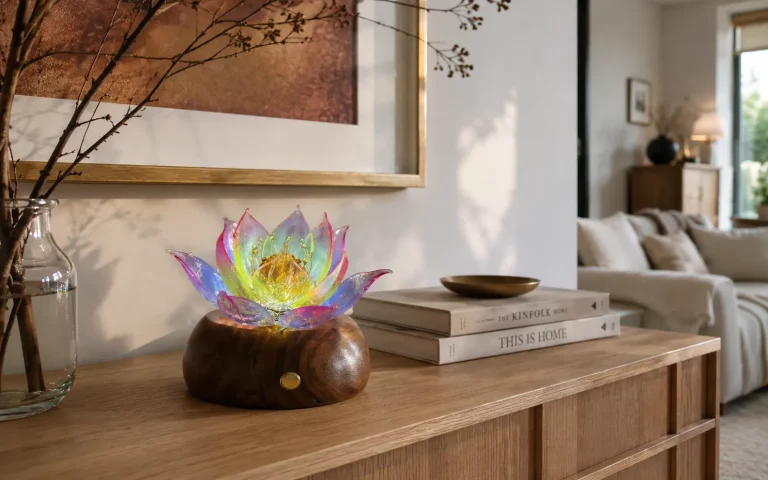
Meanwhile, living rooms offer more possible surfaces but also require greater attention to scale. A small lotus may feel lost in the center of a large sideboard. Instead, place it within a smaller grouping of books, ceramic, stone, wood, or framed artwork.
A multicolored lotus can become a stronger focal point against neutral furniture, while a smoky lotus may suit darker wood and restrained interiors. For a more sculptural room, a taller vase object can occupy an entry console, cabinet, or open shelf with greater visual weight.
Study or Home Office
In a study, the object should remain visible without entering the primary work area. Choose a back corner, side return, shelf, adjacent cabinet, or credenza. Keep monitors, keyboards, documents, charging cables, and frequently used tools unobstructed.
Smoky glass works naturally in deeper workspaces, while balanced blue-white or multicolored glass can create contrast against screens and functional furniture.

Entryway
In an entryway, the gift should have a clear silhouette and stable placement. Compact lotus lights suit wider consoles; meanwhile, a vertical glass rose or vase object may work better on a narrow surface.
Because entry tables often collect keys, mail, bags, and small personal items, make sure the glass object will not be crowded or knocked during daily use.
Choose Between a Lotus Light, Glass Rose, and Vase Object
Glass Lotus Light
Best for bedside tables, shelves, study corners, side tables, and recipients who appreciate both glass craft and localized evening atmosphere.
Vermilion Glass Rose
Better for narrow surfaces, anniversary gifting, and recipients who prefer a familiar floral form with a stronger vertical silhouette.
Studio Glass Vase Object
Suited to larger shelves, sideboards, entry tables, studios, and design-led homes with more open display space.
Match the Form to the Surface
A lotus uses more width, a rose creates height, and a vase object needs both vertical clearance and greater protection from movement.
Compact Illuminated Lotus
For smaller interior surfaces, a compact lotus light is the most flexible option. Its broad open petals create a low sculptural shape, while the internal light reveals the glass after dark.
Choose this form when the recipient enjoys decorative objects and subtle atmosphere lighting. Nevertheless, it should not be presented as a reading lamp or primary room light.
Vertical Glass Rose
When the available surface is narrow, a vertical glass rose often works better than a wide flower. In addition, its silhouette is more graphic and immediately recognizable when the room needs height rather than width.
This form may feel more direct as an anniversary or birthday gift, especially for someone who naturally responds to roses and deeper red tones.
Studio Glass Vase Object
Among the three forms, a non-illuminated vase object offers the strongest sculptural presence. Rather than relying on internal light, its visual effect comes from proportion, glass transparency, stem curves, flower structure, and the relationship between the open bloom and closed bud.
This form is less flexible than a compact lotus, but it may feel more substantial as a housewarming or milestone gift. It also requires more height, more open space, and a surface protected from regular movement.

Choose by Color and Visual Presence
Above all, color should be chosen according to the recipient’s real home rather than a fixed symbolic system. The following guide provides a practical starting point.
Lunar Lotus
Frosted white and pale blue glass for light bedrooms, ivory walls, linen, pale timber, and restrained interiors.
Explore Lunar Lotus →Aurora Lotus
Blue-white glass, violet-pink lower tones, and a warmer center for neutral rooms that need color without strong saturation.
See Aurora Lotus →Noir Lotus
Smoky white glass with darker edges for dark wood, gray interiors, focused studies, and recipients who prefer restraint.
Discover Noir Lotus →Prism Lotus
Pink, violet, pale green, blue, and warm yellow transitions for recipients who enjoy expressive color and changing light.
View Prism Lotus →Rosefire Lotus
Rose, violet, and pink-purple tones for bedrooms, dressing areas, anniversaries, and warmer personal gifting.
Consider Rosefire Lotus →Vermilion Rose
A deeper red floral form for narrow shelves, desks, entry consoles, and recipients who prefer roses to open lotus silhouettes.
Explore Vermilion Rose →Practical Details Before Sending a Handmade Glass Gift
Confirm That There Is a Suitable Surface
The recipient should have a stable, level surface away from the edge. In practice, compact lotus lights need open space around the petals, while vase objects require additional height and protection from movement.
Understand the Lighting Purpose
A glass lotus light creates localized decorative illumination. In use, it reveals petal edges, layered color, transparency, and the relationship between the flower and the walnut base. However, it does not replace a reading lamp, desk lamp, ceiling light, or primary bedside light.
Expect Handmade Variation
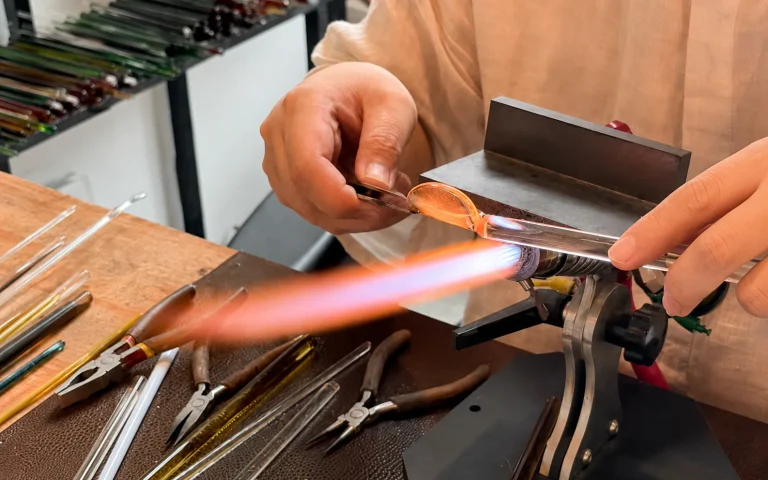
Lampworked glass is shaped and assembled by hand. Therefore, small differences may appear in petal curve, thickness, translucency, overlap, texture, color transition, internal bubbles, and minor asymmetry.
These variations belong to the handmade process. By contrast, damage, cracking, broken components, or functional failure require separate assessment. For a more detailed explanation, read why every lampworked glass lotus is slightly different .
Allow Time for Made-to-Order Production
9Purple glass objects are made after the order is placed rather than taken from a large ready-made inventory. Therefore, the buyer should allow time for production, inspection, protective preparation, and international shipping.
For date-sensitive occasions, ordering too close to the anniversary, birthday, or housewarming may create unnecessary pressure.
Confirm the Shipping Address
For example, surprise gifts can become difficult when the shipping address is incomplete or the recipient is unavailable to receive a fragile international parcel. Before ordering, confirm the full recipient name, street address, unit number, postal code, phone number, country, and region.
Protective Packaging, Not a Presentation Gift Box
Each glass object is packed primarily for protection during international transit. Because the handmade glass structure is fragile, current packaging is protective shipping packaging rather than a decorative presentation gift box.
Made-to-order glass objects are generally final sale after order confirmation, except in verified cases of transit damage, confirmed defect, or an incorrect item. Review the Refund & Return Policy and Shipping Policy before ordering.
What to Write on the Gift Note
A gift note does not need to explain the lotus, define the recipient, or assign a spiritual meaning to the object. The most effective messages are usually short and open-ended.
For your new space, and everything that will take shape within it.
For the life we continue to build together.
Something made by hand, chosen with you in mind.
For the ideas, work, and new possibilities that begin here.
A small object for the next chapter.
You were never meant to be just one color.
A Simple Handmade Glass Gift Checklist
- Room: Where is the recipient most likely to place the object?
- Surface: Is there enough stable space for the chosen form?
- Color: Do they prefer pale, warm, dark, neutral, or multicolored interiors?
- Shape: Would a compact lotus, vertical rose, or taller vase object suit the room?
- Lighting: Do they understand that the lotus light is decorative rather than task lighting?
- Variation: Are they comfortable with natural handmade differences?
- Timing: Is there enough time for made-to-order production and international delivery?
- Address: Has the full shipping information been confirmed?
- Message: Can the gift note remain simple and personal?
- Policy: Have the shipping and after-sales terms been reviewed?
Final Thoughts
A handmade glass gift does not need to define the recipient or explain the occasion in excessive detail.
The most successful choice begins with attention: attention to the person’s room, their preferred colors, the surfaces they use, and the kinds of objects they continue to notice over time.
A compact lotus light can add color and evening atmosphere to a bedside table or shelf. By contrast, a vertical glass rose creates a clearer floral accent, while a studio glass vase object brings greater sculptural presence to a design-led home.
Ultimately, the object becomes meaningful through its material, its placement, the moment in which it was given, and the life that continues around it.
Frequently Asked Questions
Is handmade glass a good housewarming gift?
Yes, especially for recipients who appreciate craft, interior objects, and materials that change with light. Choose a compact and adaptable form when the recipient’s room arrangement is still evolving.
Which glass lotus is easiest to give as a gift?
Lunar Lotus is the most restrained and adaptable option for pale or neutral interiors. Aurora is another flexible choice when you want some visible color without strong saturation.
Is a glass lotus suitable for an anniversary?
Yes. A glass lotus can suggest continuity, renewal, or shared space without requiring a fixed symbolic interpretation. Rosefire, Prism, or Vermilion Rose may suit recipients who prefer warmer or more expressive color.
Does a glass lotus have a fixed religious meaning?
No. Although the lotus appears in several cultural and religious traditions, a modern glass lotus can also be appreciated as a handmade botanical object, decorative light, or personal gift without formal religious use.
Can a glass lotus light be used as a bedside lamp?
It can add a localized evening glow beside the bed, but it should not replace a proper reading lamp or primary bedside light.
Are handmade glass pieces identical?
No. Each piece follows the intended design and color direction, but small variations in petal curve, transparency, texture, overlap, and color transition are expected.
Does the product arrive in a decorative gift box?
No. The current packaging is designed primarily to protect the fragile handmade glass during international transit. It is protective shipping packaging rather than a decorative presentation gift box.
What should I do if the glass arrives damaged?
Contact 9Purple promptly and keep clear photographs of the external package, shipping label, internal protection, and glass object. Verified transit damage is reviewed under the published after-sales policy.